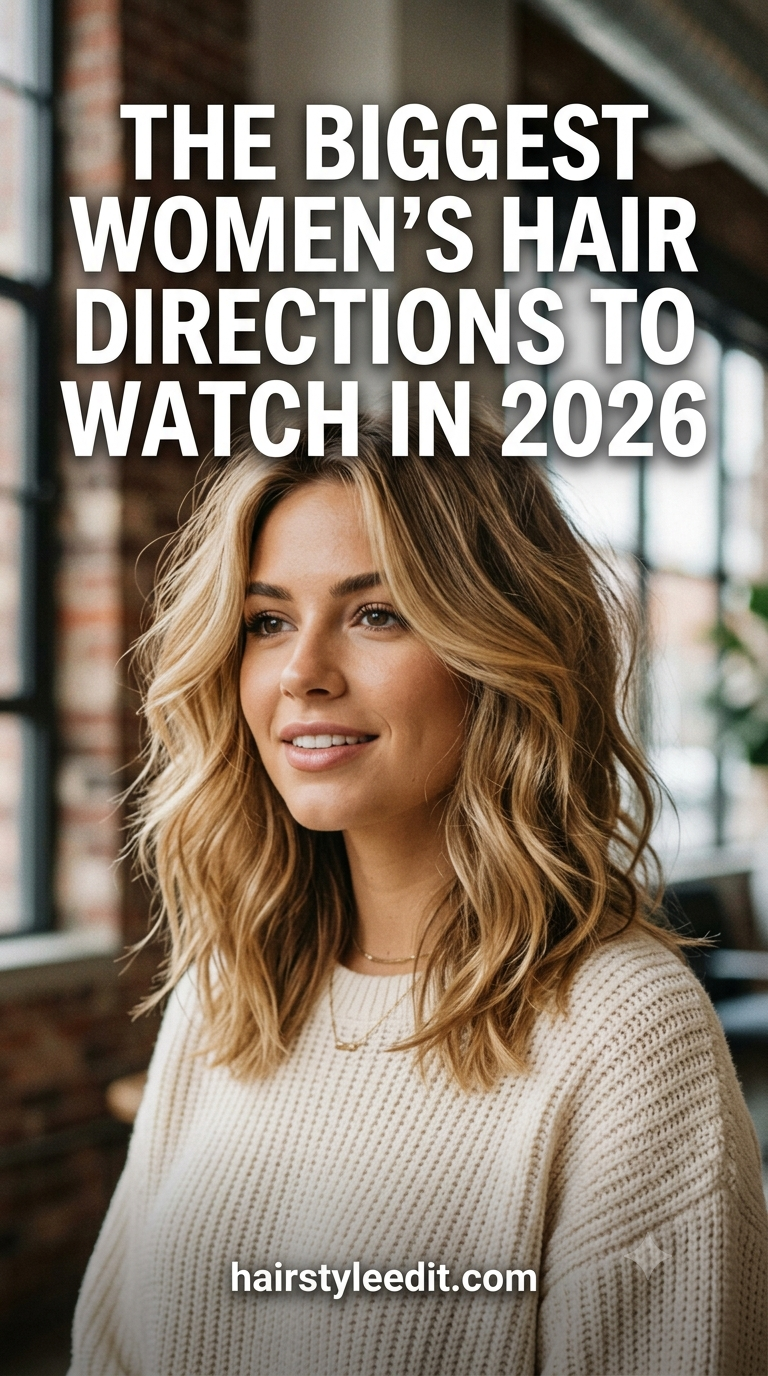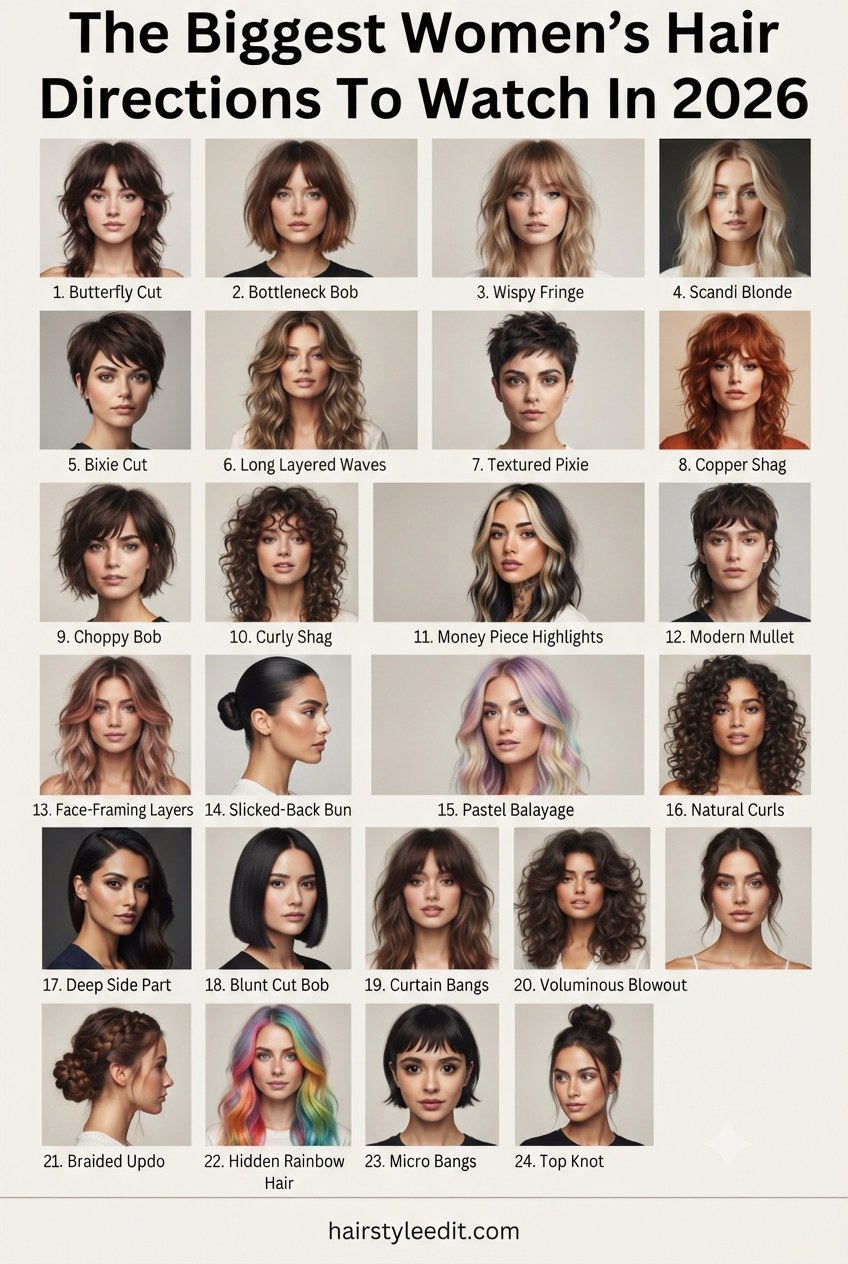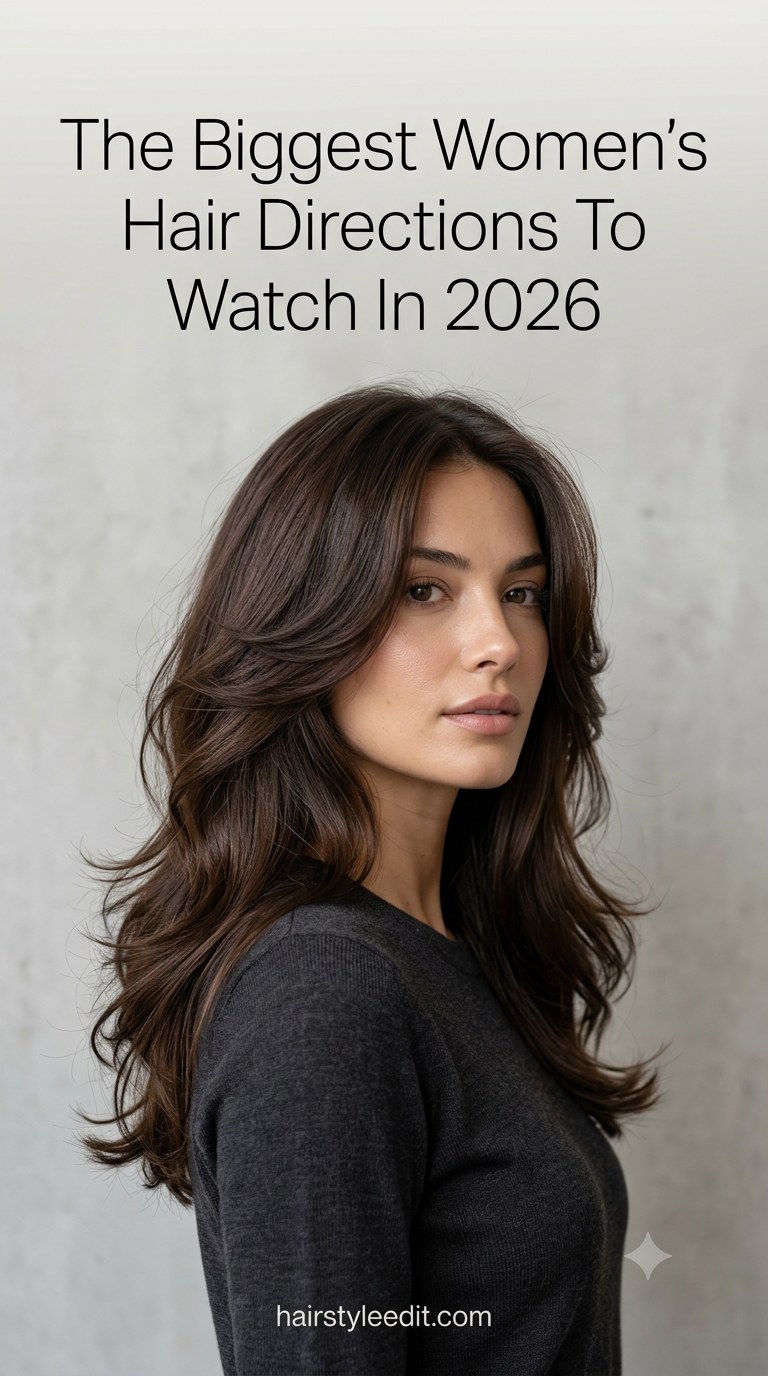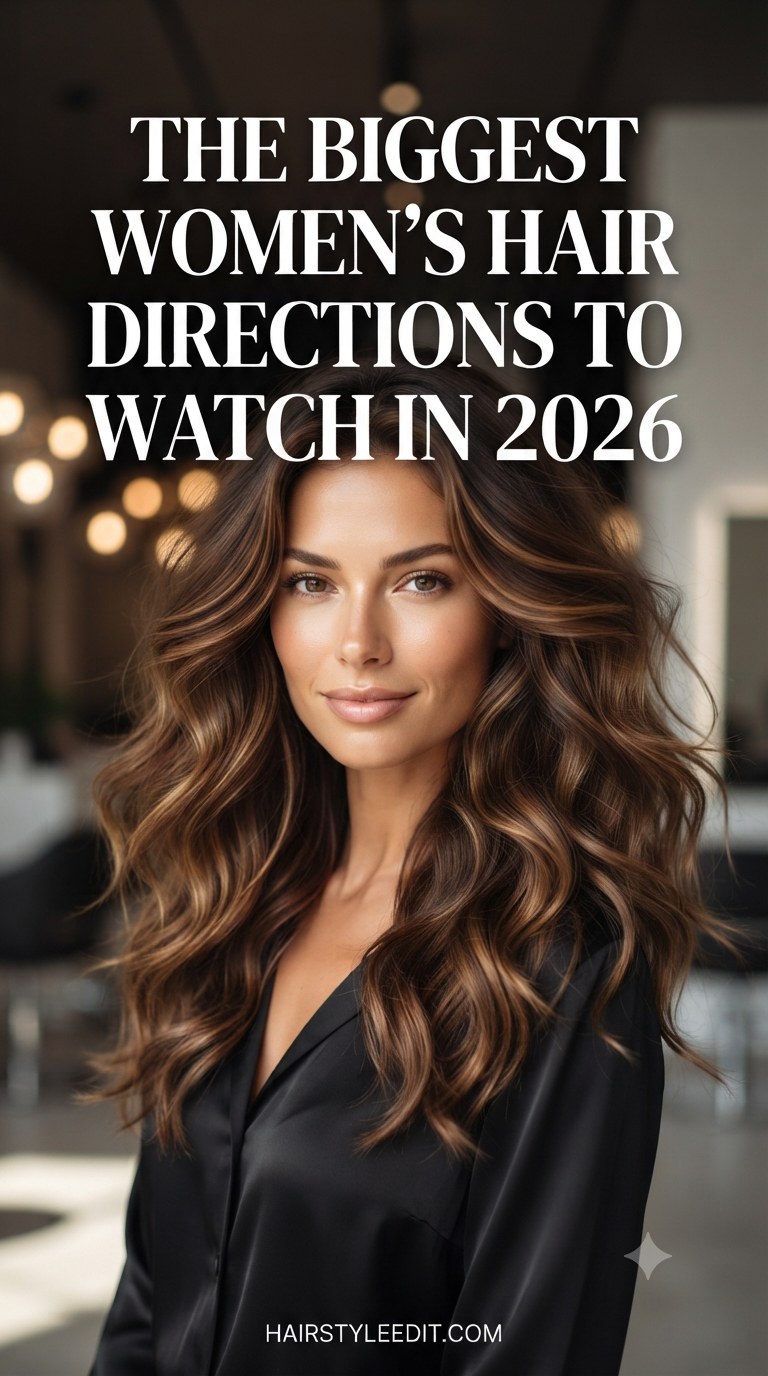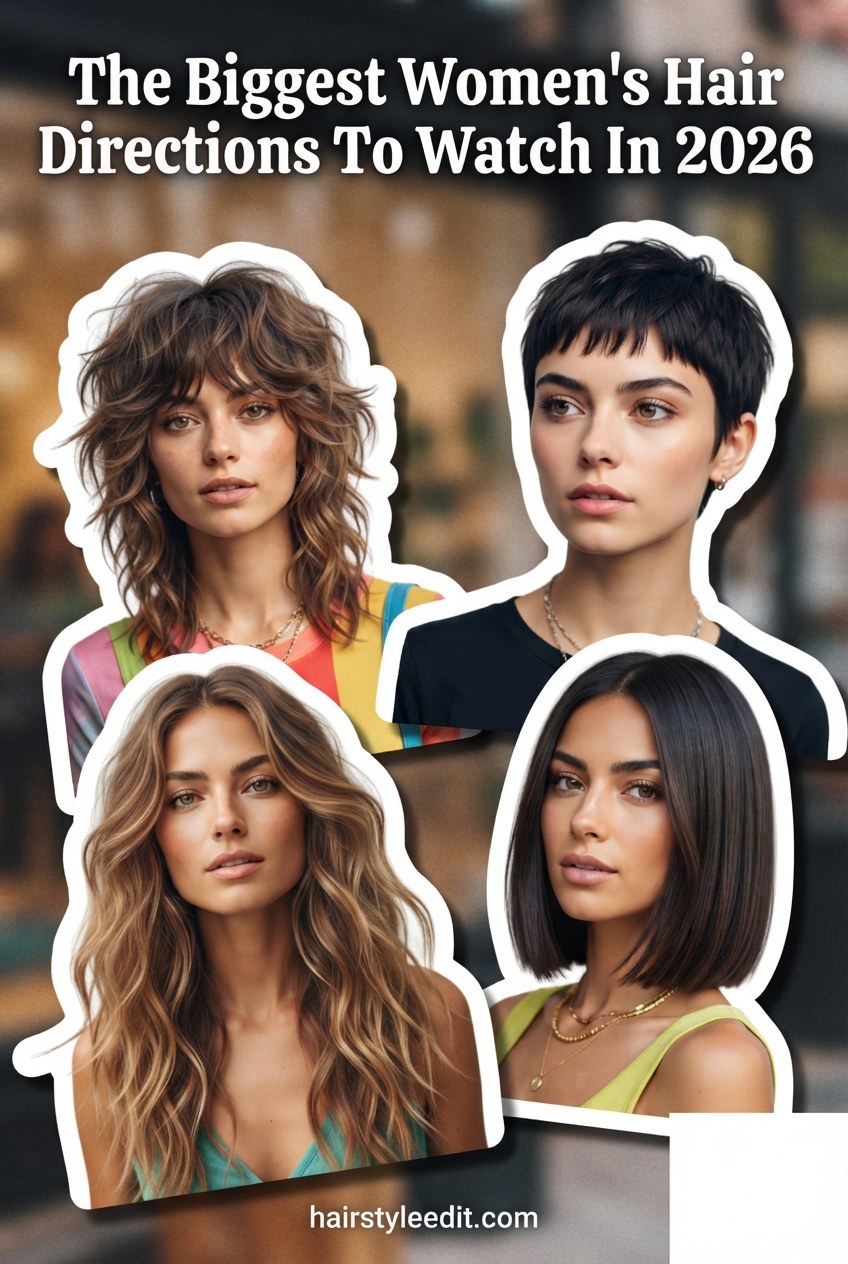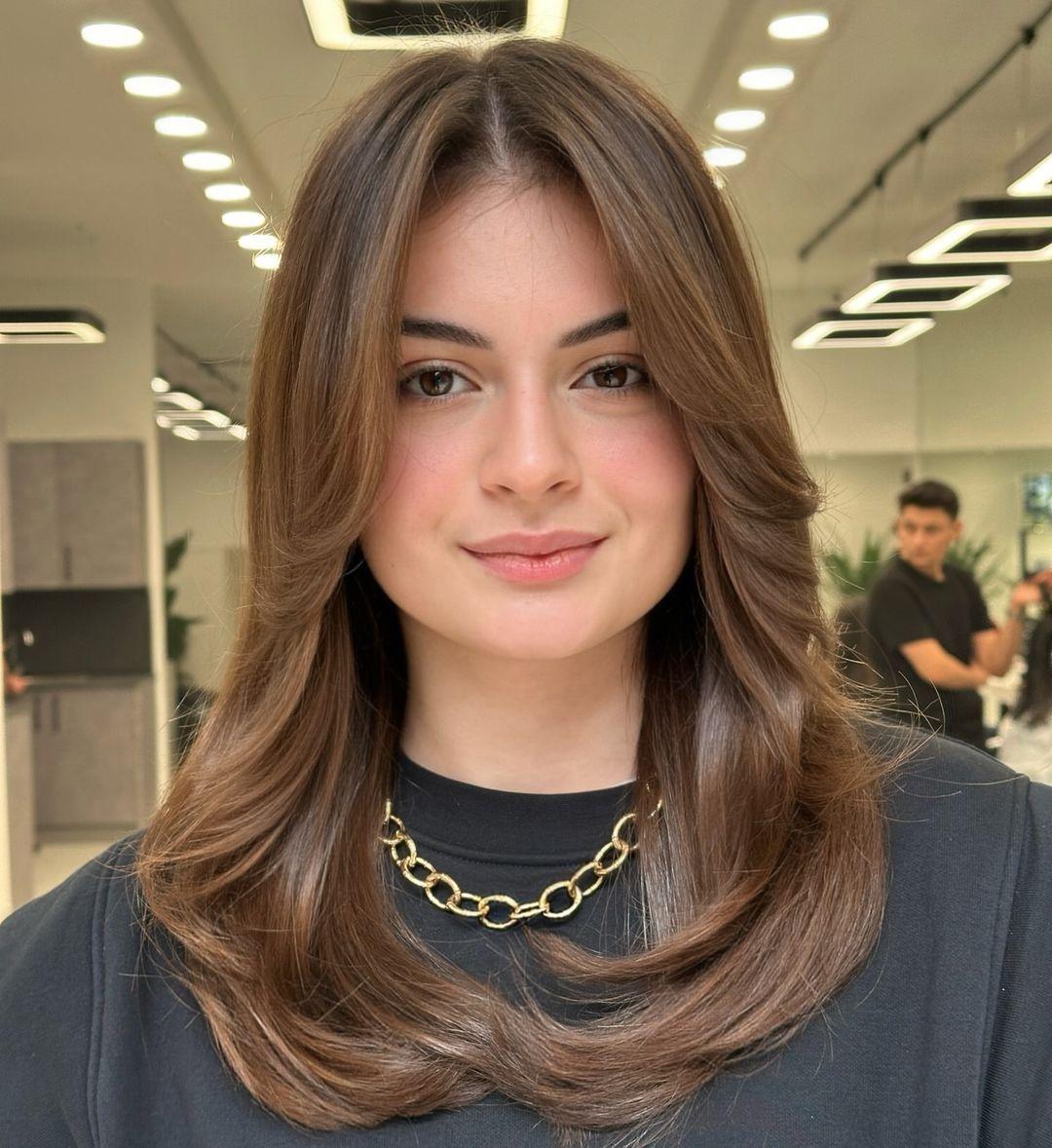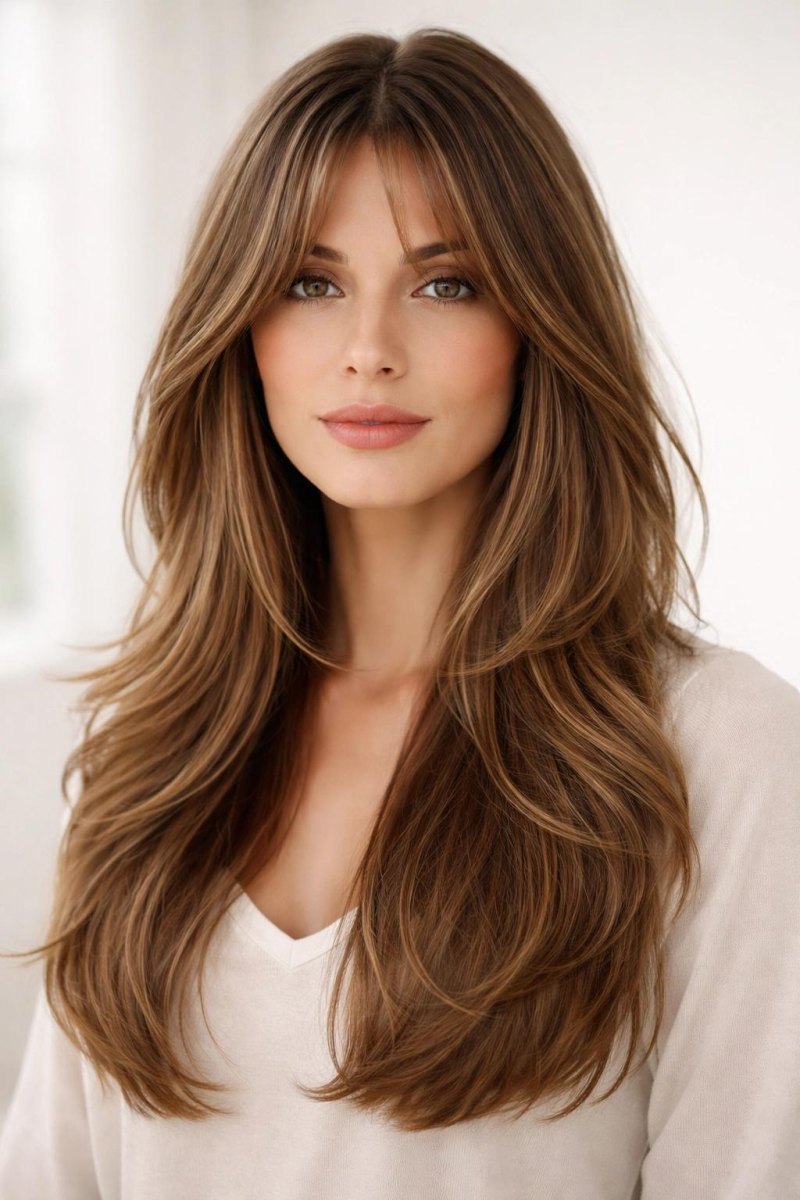
I selected these looks because the strongest 2026 hair direction is moving toward personalised texture and movement rather than one strict silhouette. Current trend reports highlight layers, bobs, natural texture, and versatile styling as major themes.
Each image shows a different approach, from short precision cuts to long colour work. I focus on what the style actually requires: length, upkeep, and styling time.
Quick guide
- Short cuts need more frequent shaping appointments.
- Colour changes require professional consultation and safety checks.
- Natural texture usually looks strongest when the cut works with it.
1. Airy Butterfly Hair Layers with Curtain Fringe
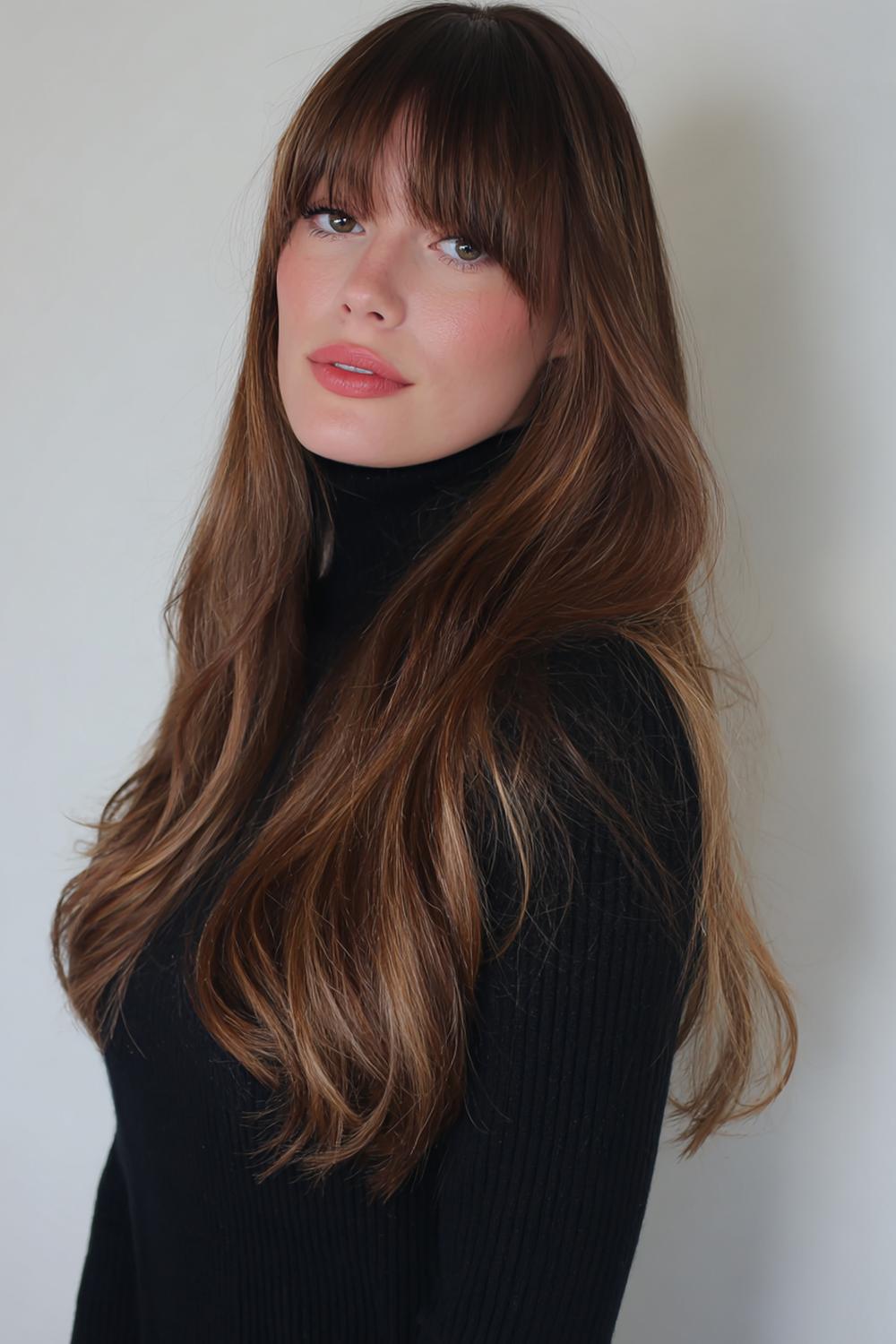
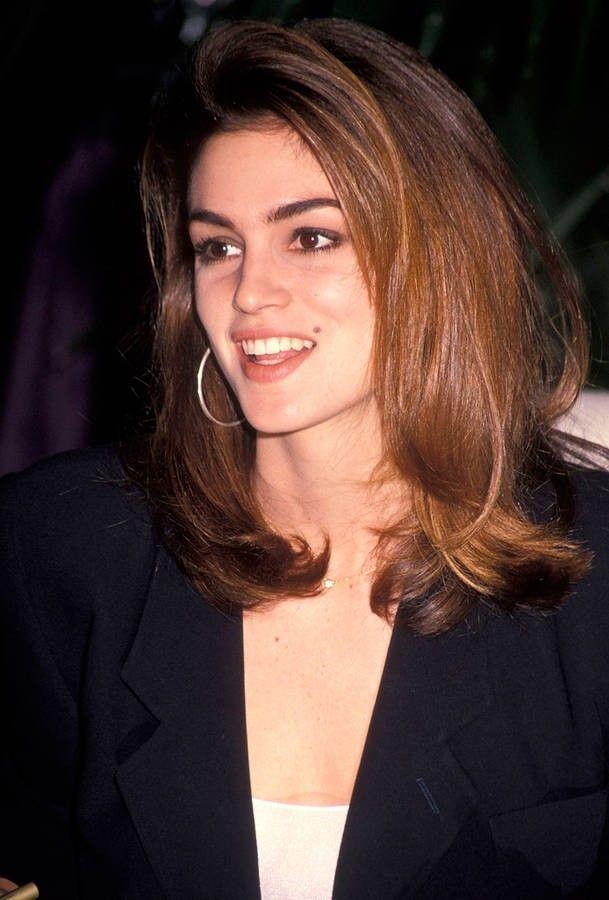
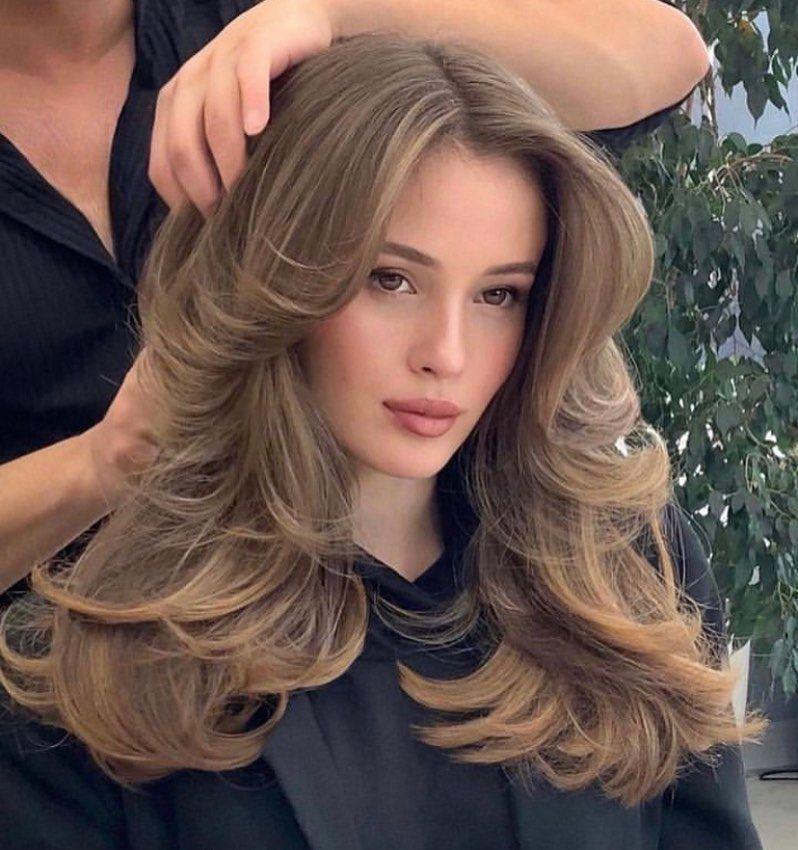
This long layered cut in the photo has soft cascading pieces and a light curtain fringe. I like it for creating visible movement without losing length. Butterfly layers remain popular because they combine face-framing sections with longer lengths.
Expect styling with a round brush or blow-dry brush and trims around every 8 to 12 weeks for the layer shape to stay balanced.
2. Glass Bob Hair with Razor-Clean Perimeter
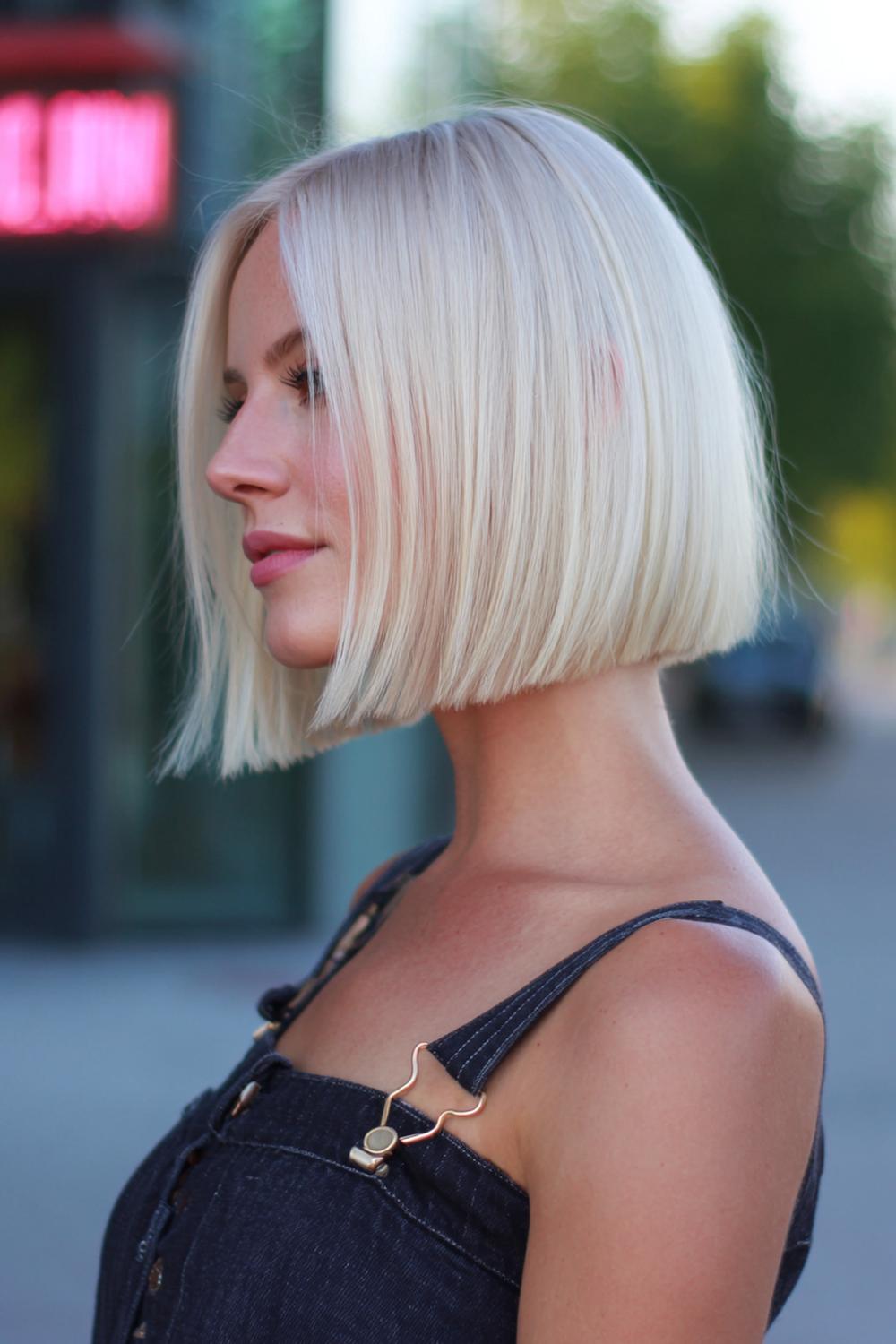
The image shows a sleek chin-length bob with a very clean outline and reflective finish. This style depends on precise cutting lines and usually suits straight or lightly wavy hair best.
I would budget regular trims because the sharp perimeter loses its effect quickly as it grows. A smoothing product and heat protection help maintain the polished glass finish.
3. Italian Bob Hair with Rounded Volume and Tucked Ends
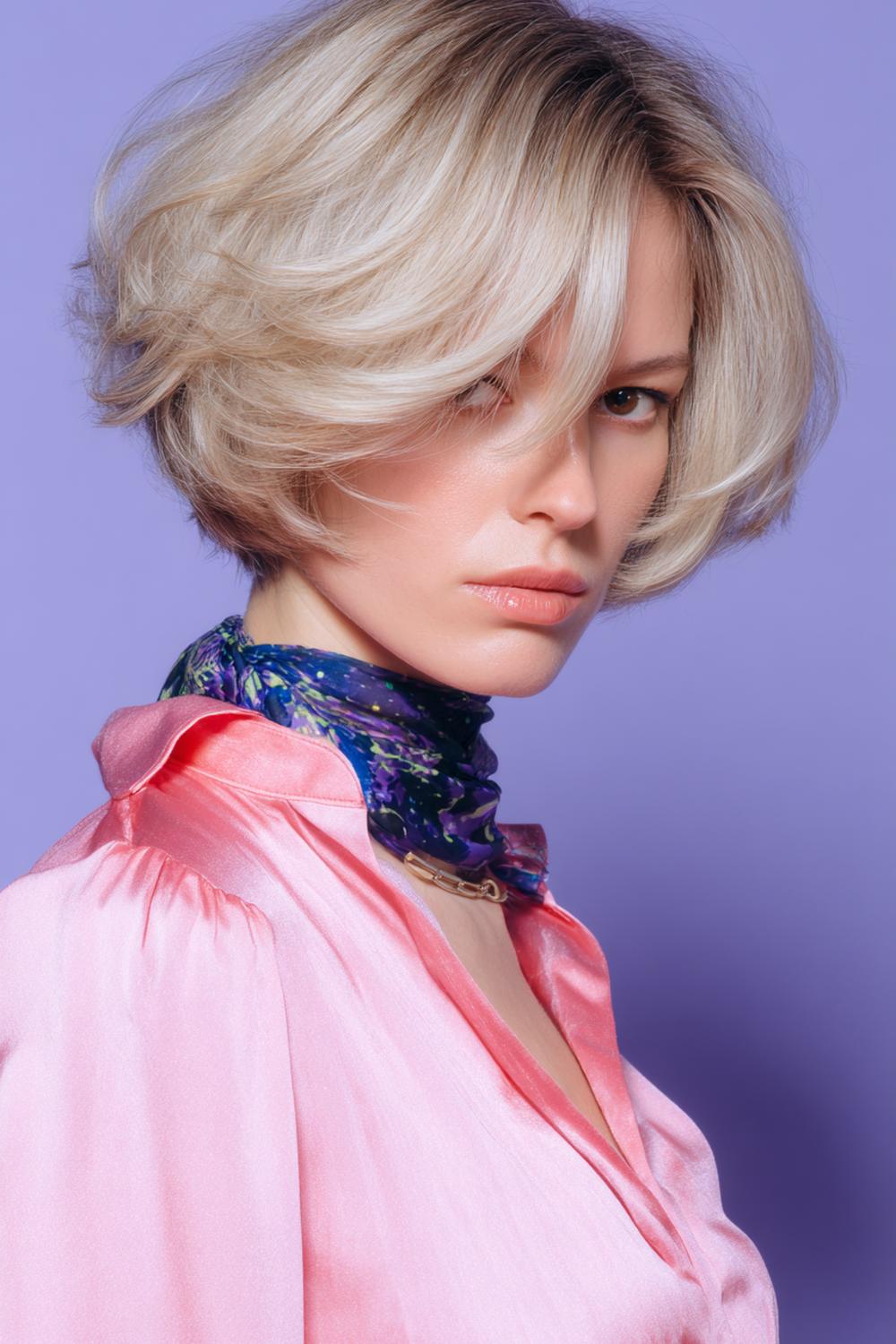
This rounded bob has a fuller shape through the sides and tucked ends. The soft internal volume makes it different from a flat blunt bob.
It works well with blow-drying techniques that lift the roots, while thick hair may need internal weight removal from a stylist.
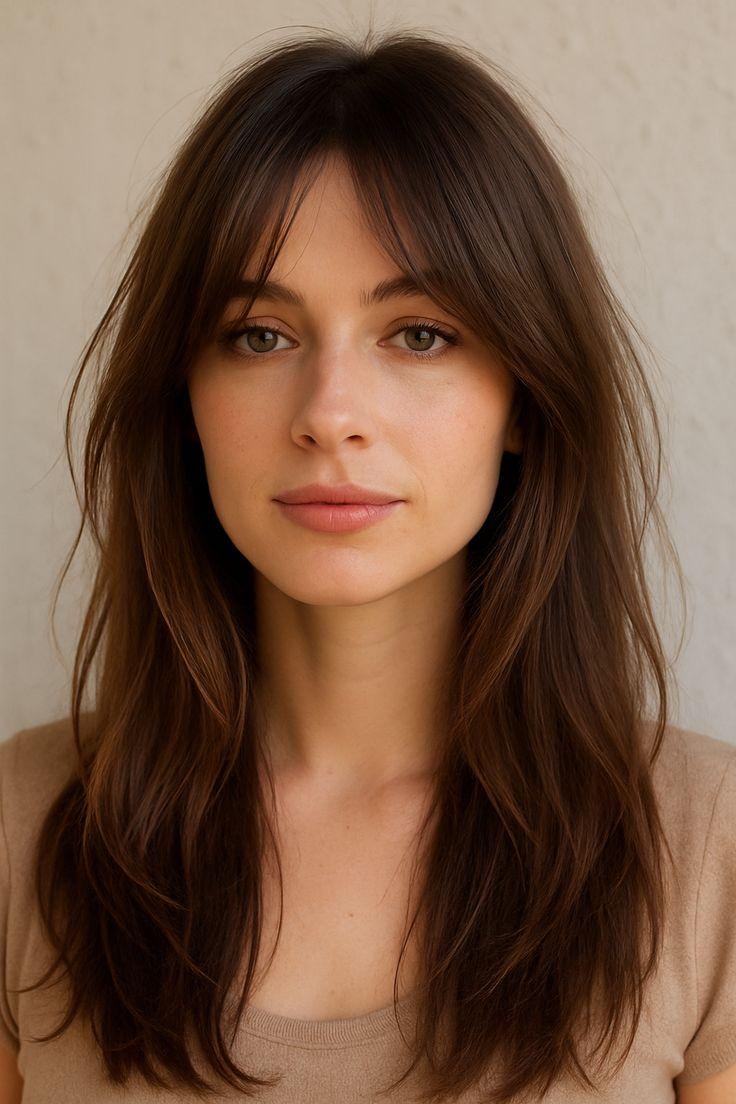
4. French Girl Hair Bob with Whisper Bangs and Texture
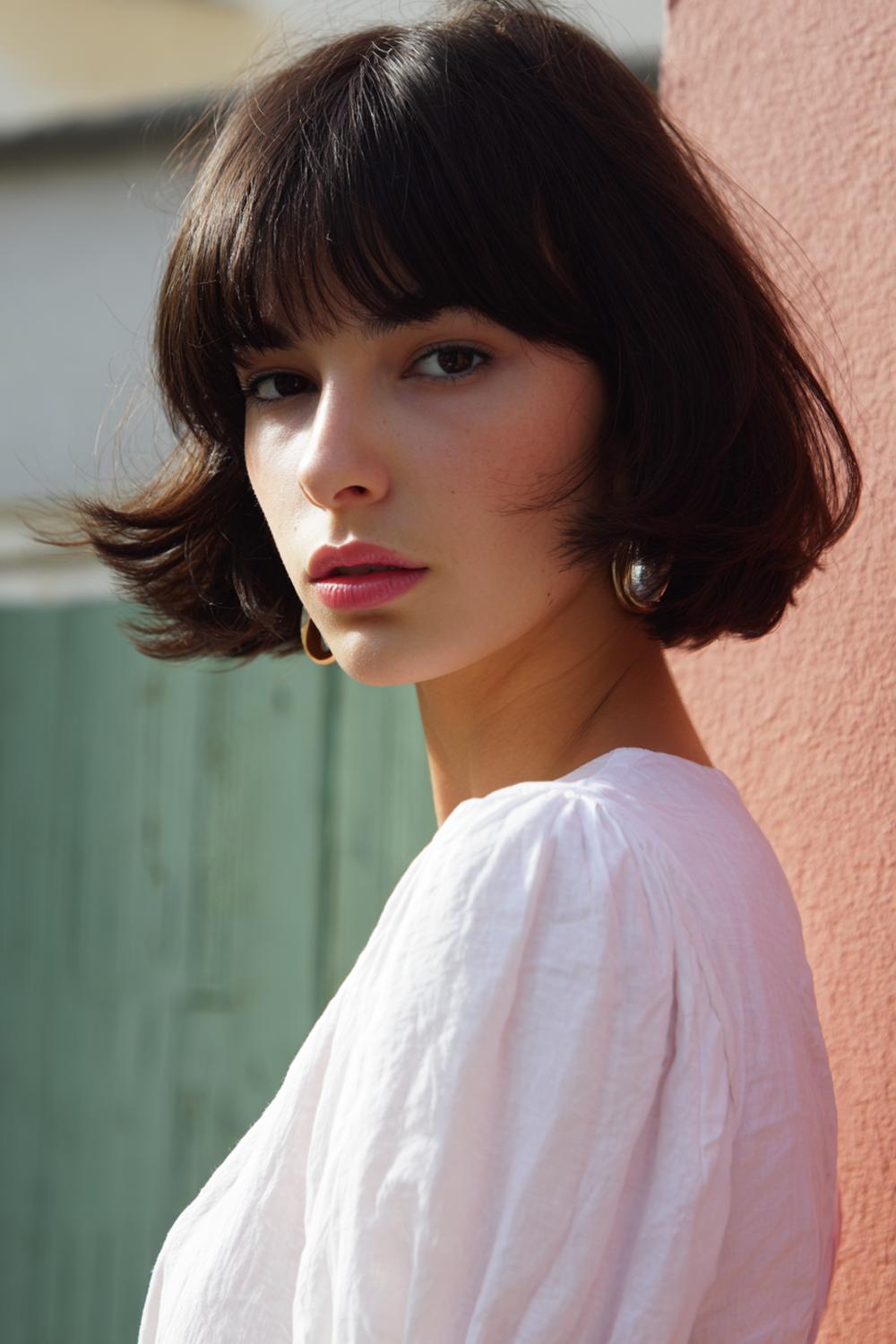
The short bob shown here uses airy bangs and loose texture rather than a rigid finish. Soft fringe styles continue to appear strongly in trend forecasts because they are easy to personalise.
Fine hair often needs less product, while thicker hair may need texture control to keep the light fringe movement.
5. Bixie Hair Cut with Feathered Crown Lift
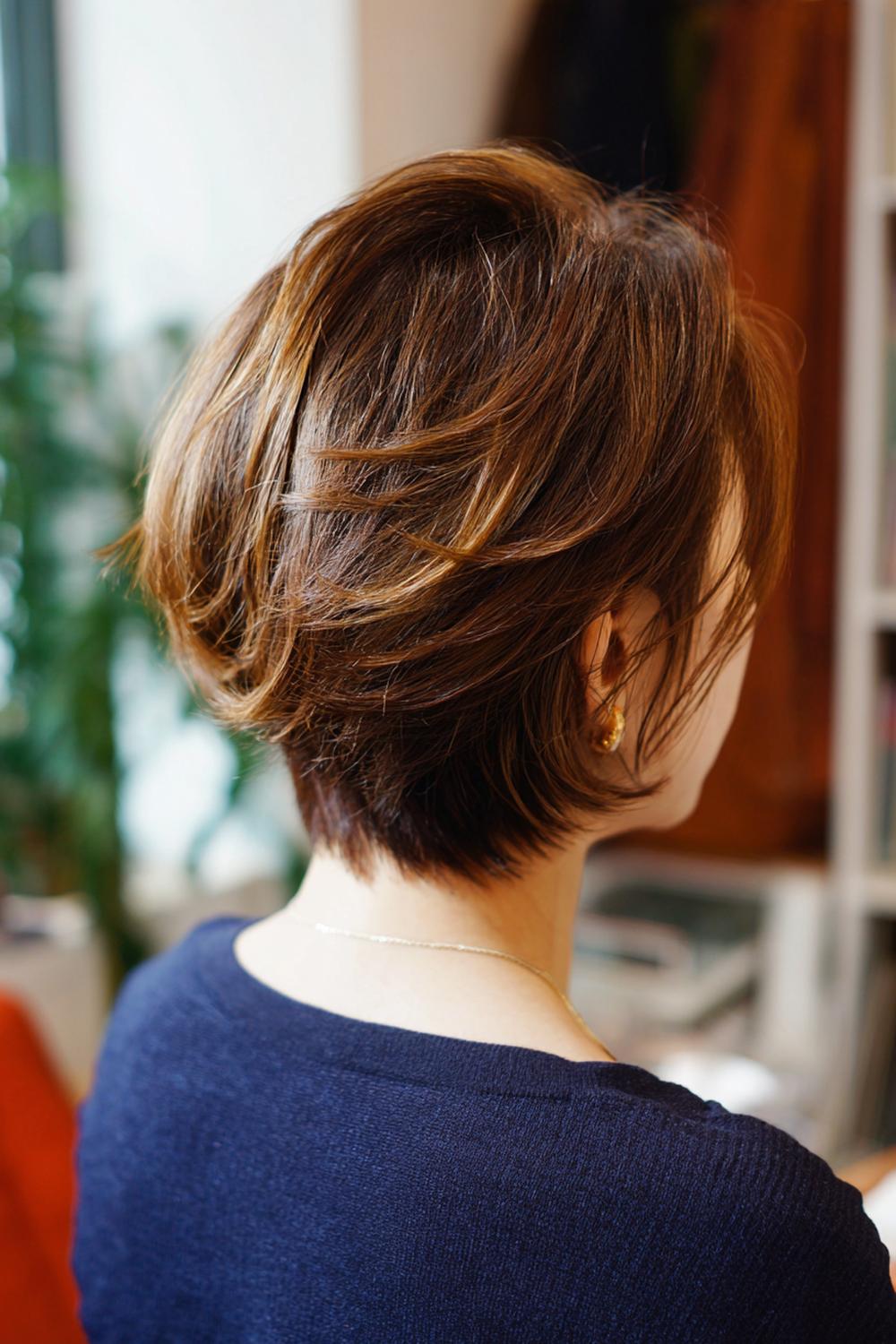
This bixie combines pixie length with bob softness, showing feathered layers around the crown. The cut gives short hair flexibility without the commitment of a very cropped style.
Maintenance is usually around 6 to 8 weeks because the shape depends on controlled layering.
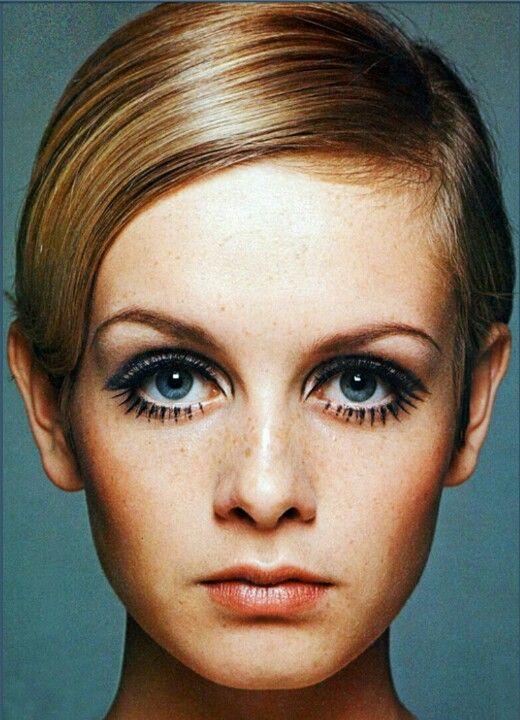
6. Pixie Hair Crop with Micro Fringe and Shine
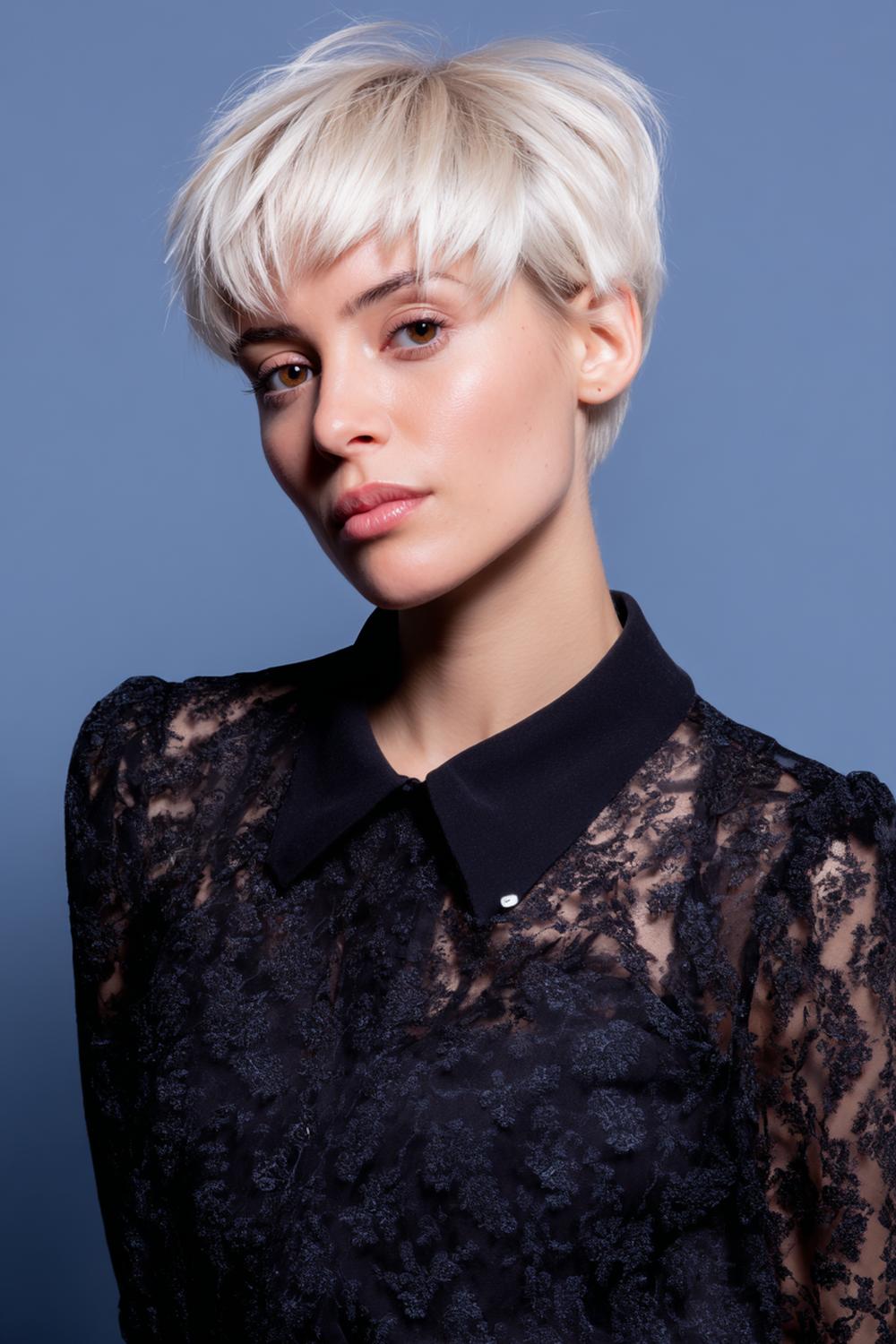
The photo shows a close crop with a tiny fringe and smooth finish. This is a high-definition short cut where every section is visible.
I recommend discussing growth patterns before cutting because cowlicks can affect the final shape. Short crops need frequent reshaping appointments.
7. Shag Hair Layers with Soft Wolf Shape and Movement
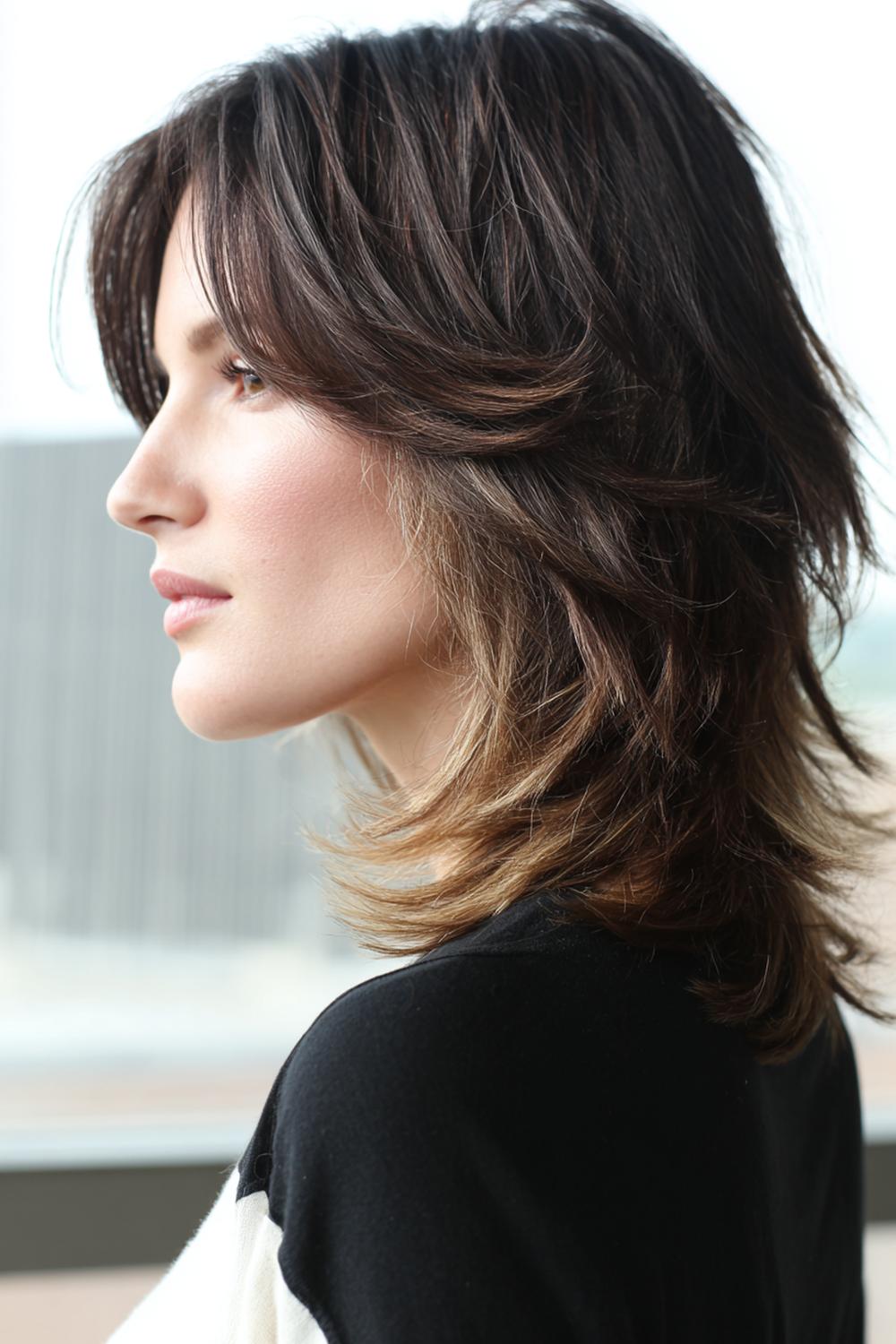
This layered shag has feathered ends and a relaxed wolf-cut influence. Modern shags are being adapted across many textures because they create natural-looking movement.
Curly and wavy hair often shows the layering strongly, while straight hair may need styling products for the piecey finish.
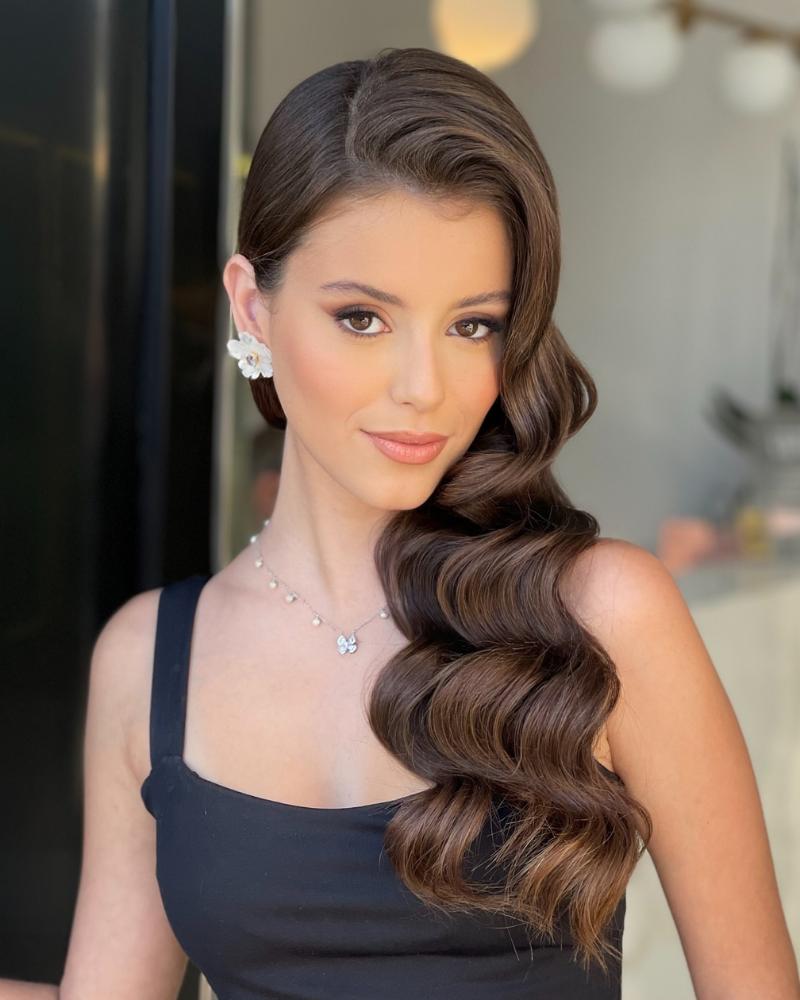
8. Long Hair U-Cut with Polished S-Curve Waves
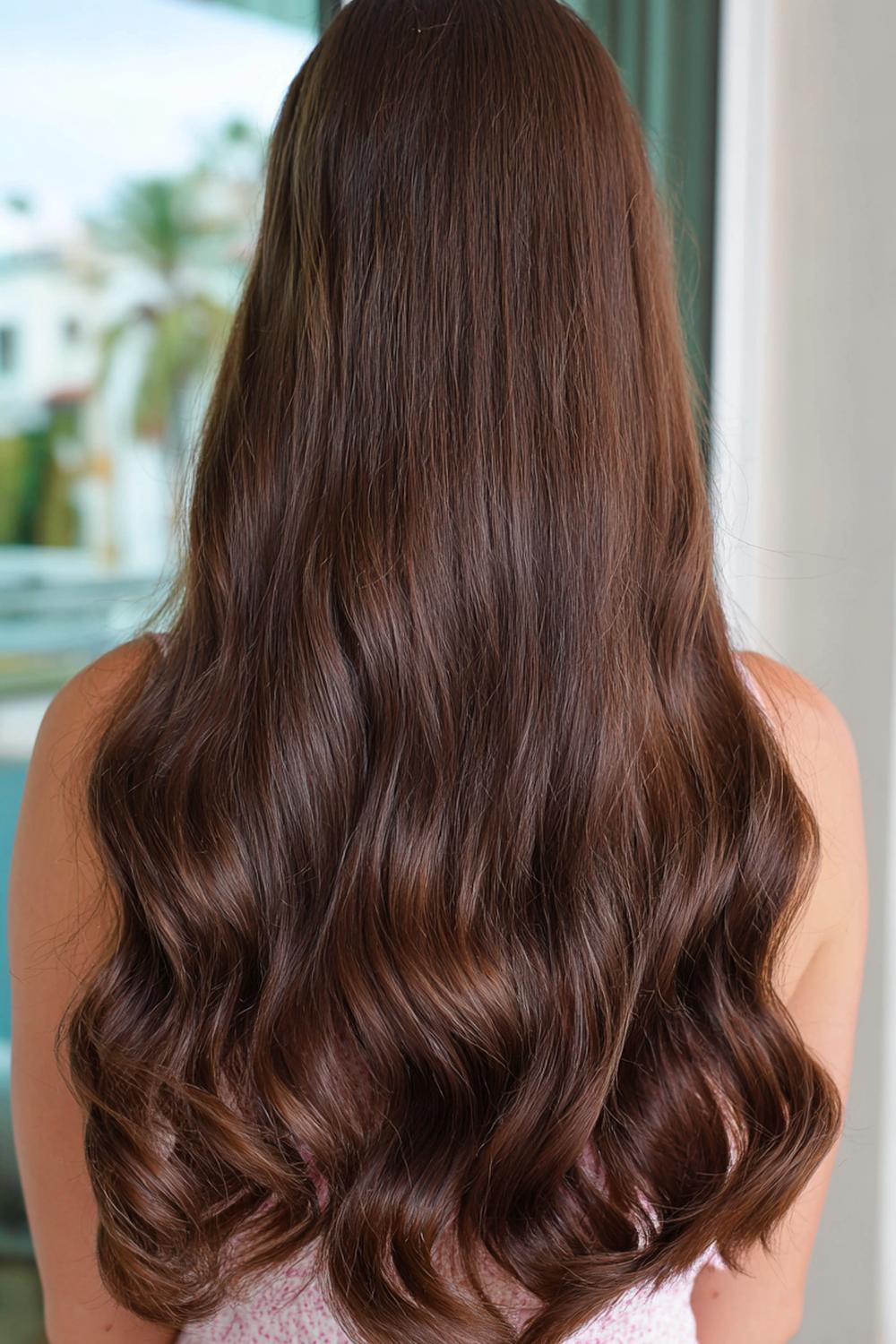
The back view shows long hair shaped into a U-cut with smooth waves. The curved hemline keeps length while preventing a heavy straight edge.
Long waves usually need heat protection before tools are used, especially when aiming for a consistent S-shaped wave pattern.
9. Long Hair Face-Framing Pieces with Cheekbone Flip
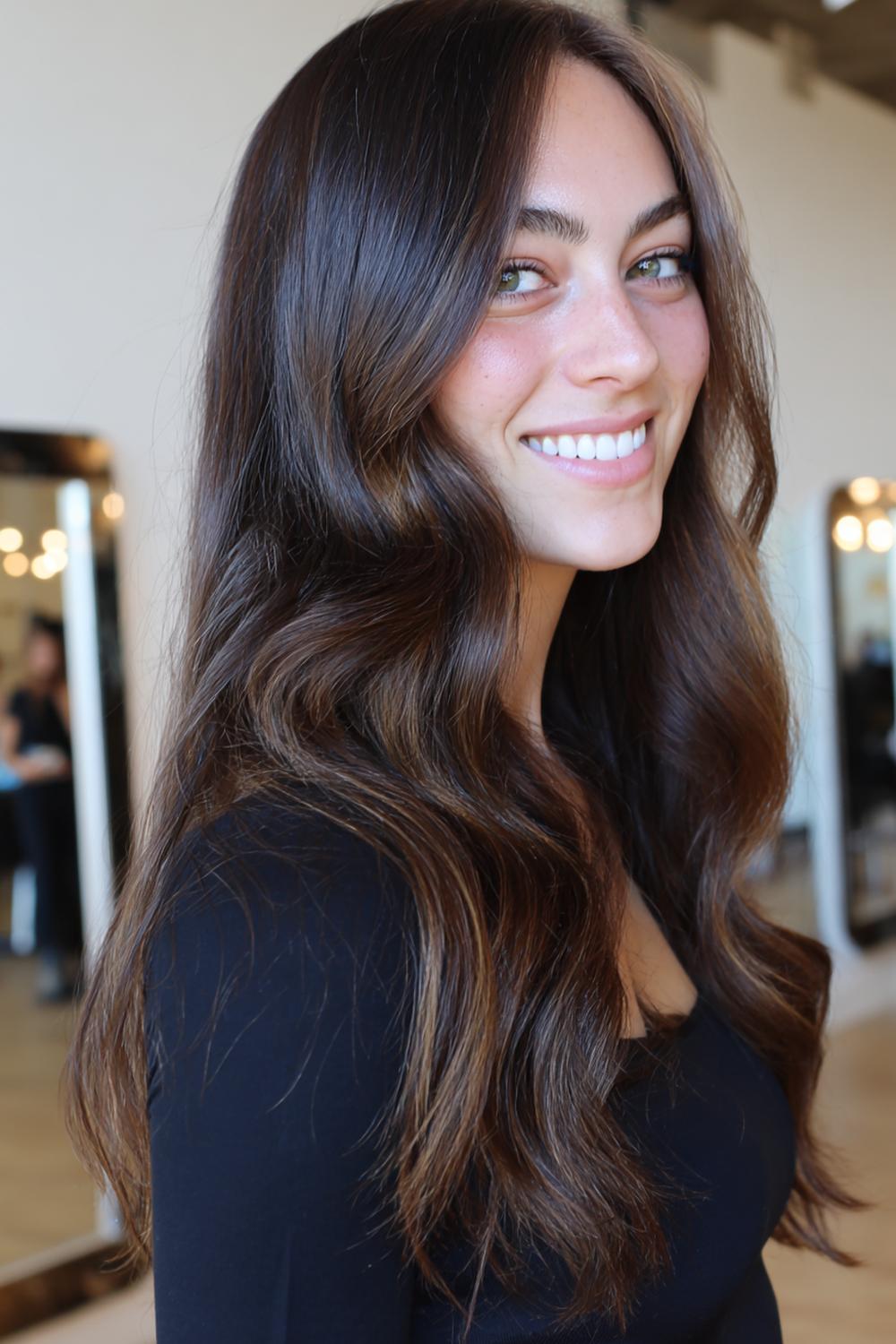
This style uses long front sections that turn away from the face. The face-framing pieces create movement without removing much length.
It is a practical update for anyone growing layers out because the front sections can be adjusted gradually.
10. Curly Hair Halo Cut with Defined Ringlets
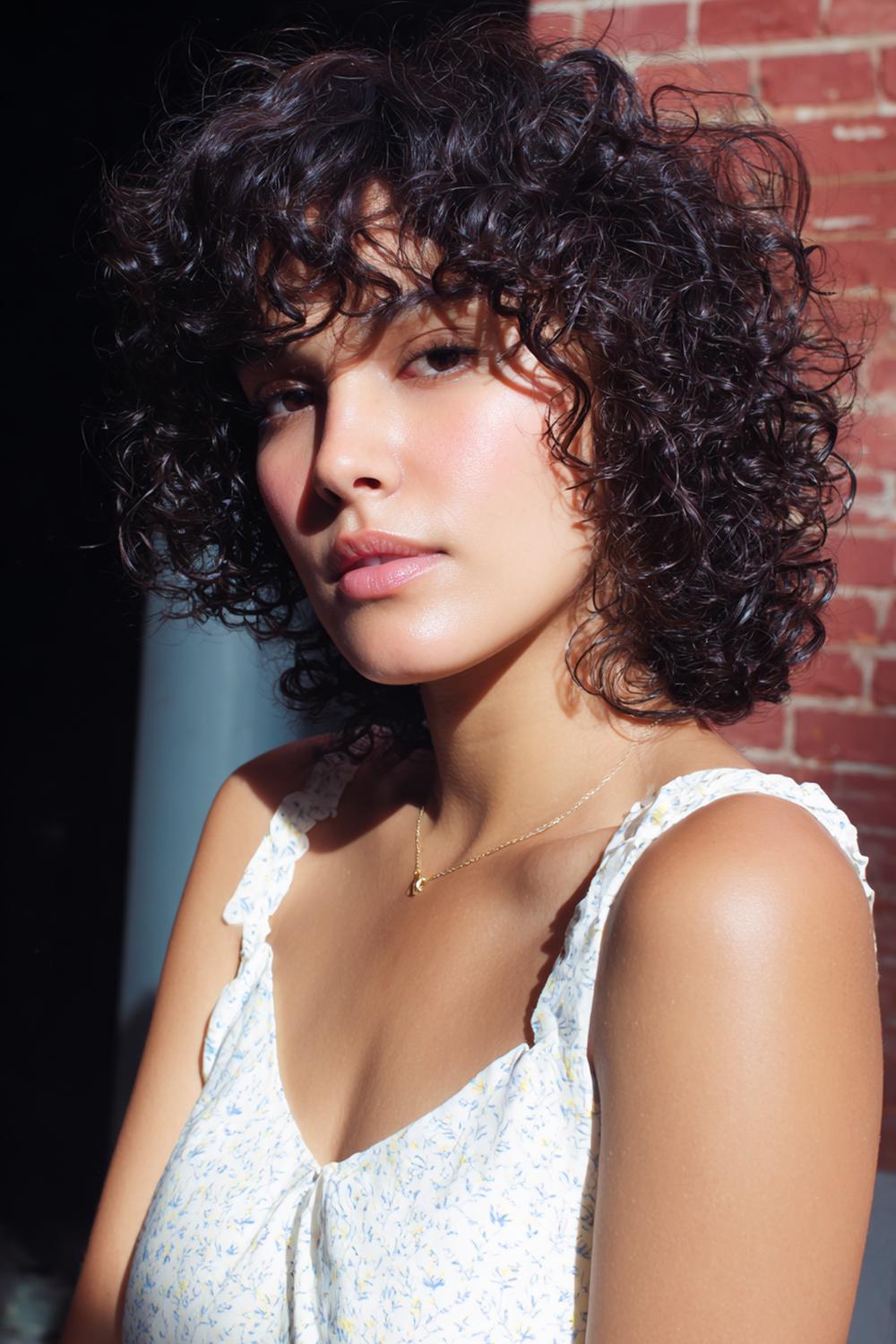
The image shows curls shaped into a rounded halo with defined ringlets. Curly cuts depend on cutting curls according to their natural spring pattern.
I avoid promising identical results across curl types because density and shrinkage change the final silhouette.
11. Coily Hair Tapered Cut with Crown Height and Edges
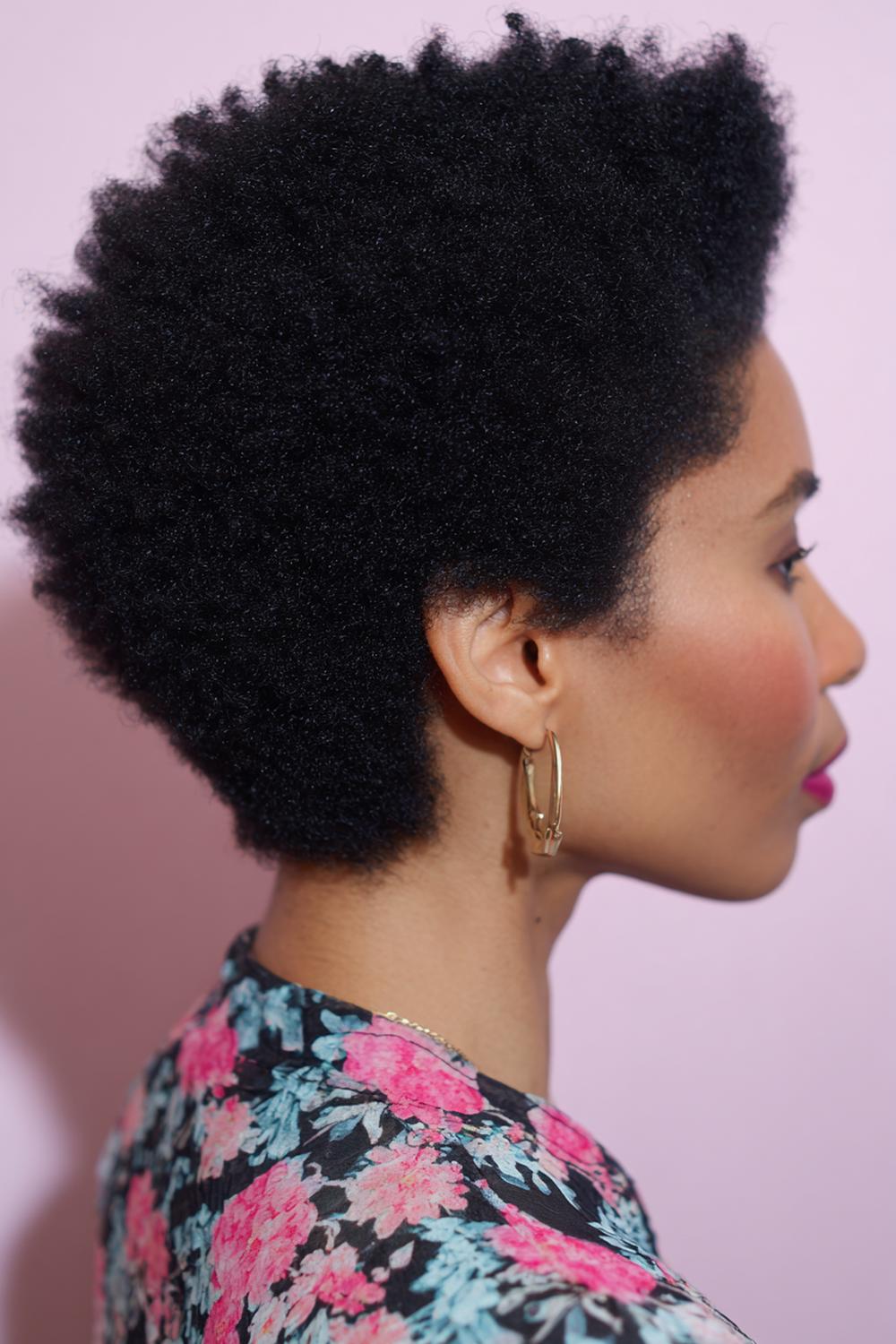
This tapered coily style keeps height at the crown while narrowing around the sides. The shape balance comes from working with coil density.
Tight styles should never feel painful or pull at the hairline because repeated tension can contribute to traction alopecia.
12. Braided Hair Crown with Loose Tendrils and Pearl Pins
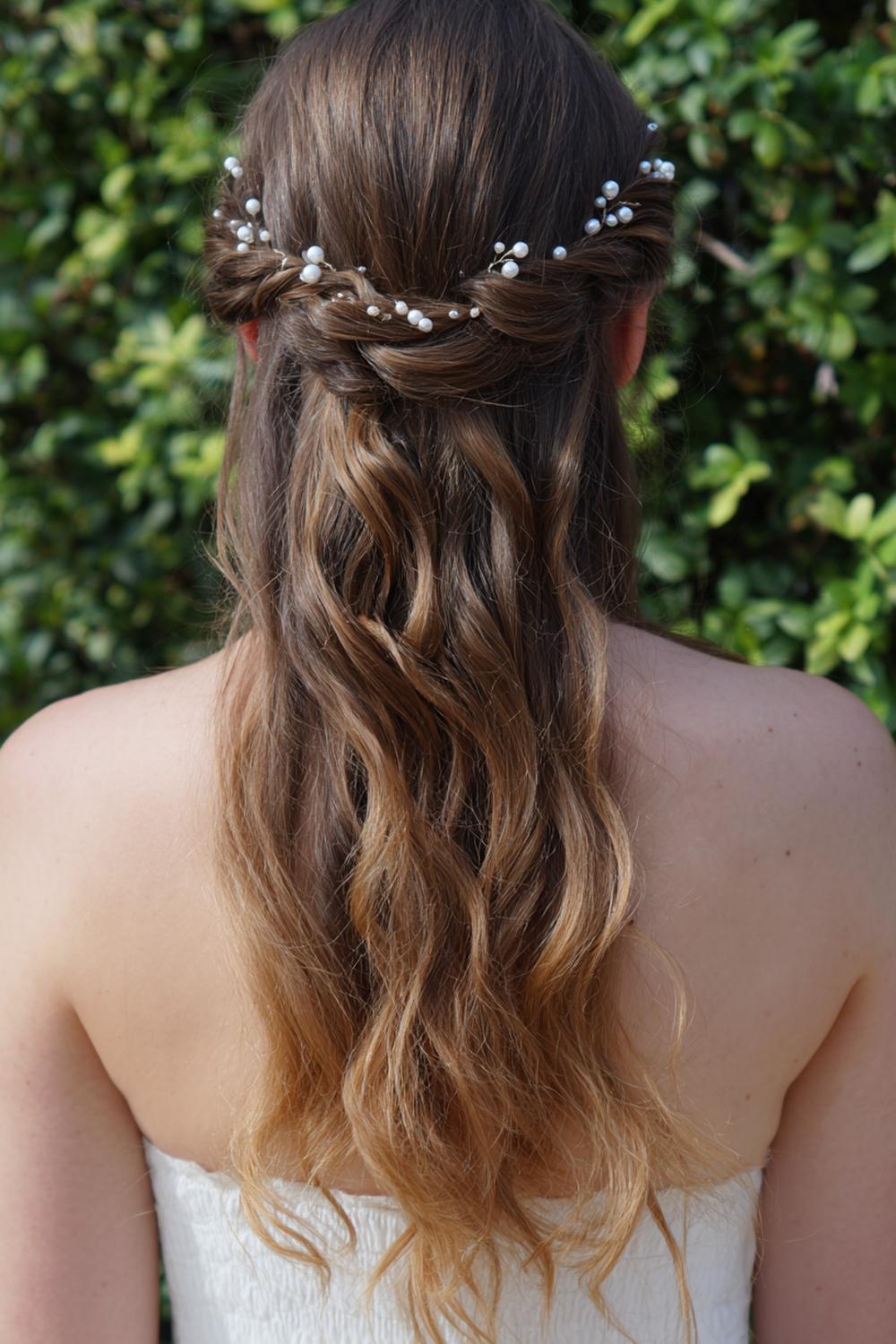
The hairstyle combines a braided crown with decorative pearl details and loose lengths. The accessory placement changes the mood without requiring a permanent cut.
Keep braids comfortable; if they pull or hurt, they are too tight.
13. Sleek Ponytail Hair with Snatched Part and Wrapped Base
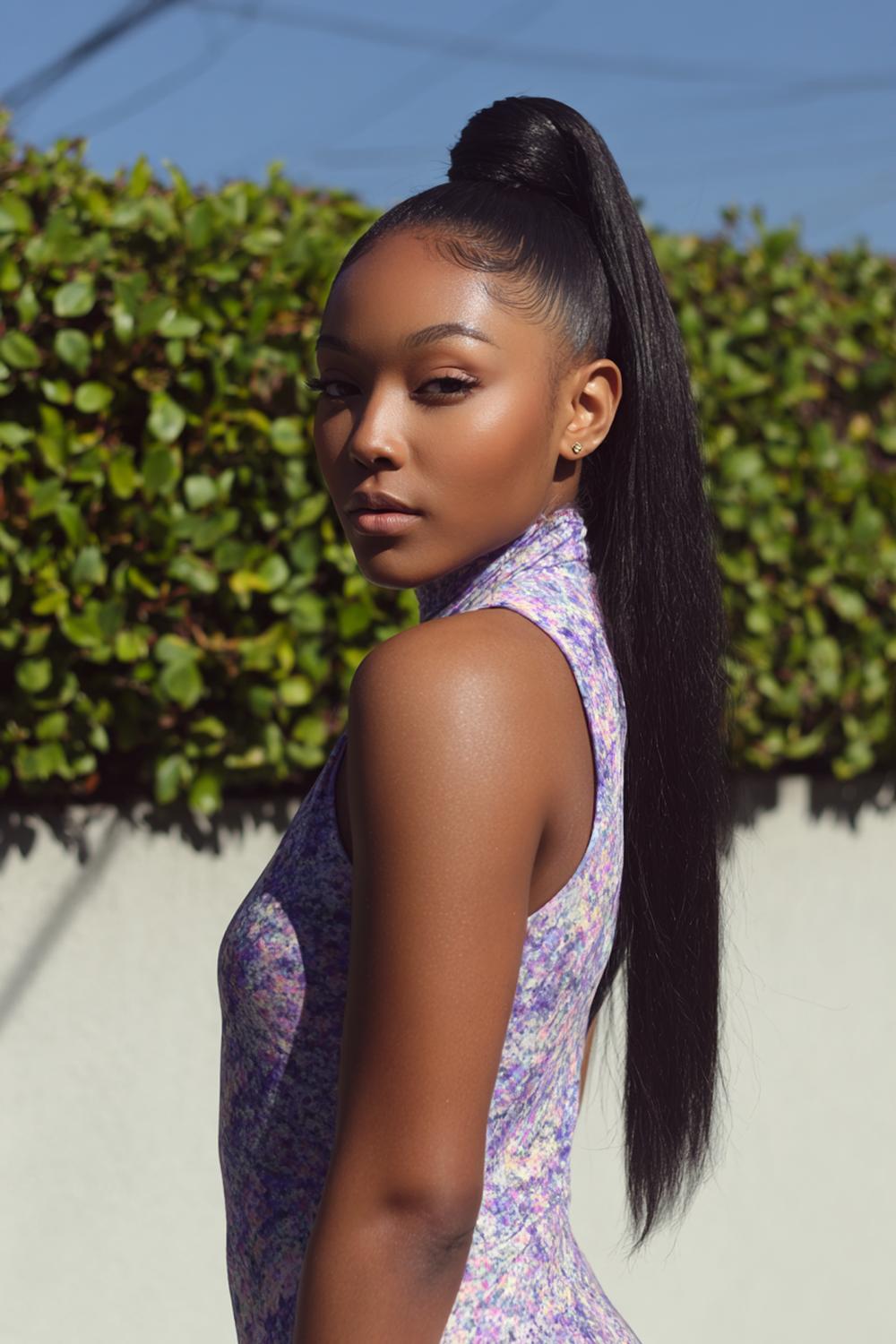
This ponytail uses a smooth top, clean parting, and wrapped elastic detail. The sleek finish usually requires smoothing products and careful sectioning.
Frequent tight ponytails can stress the hairline, so comfort matters more than maximum tension.
14. Claw Clip Hair Twist with Soft Volume and Face Pieces
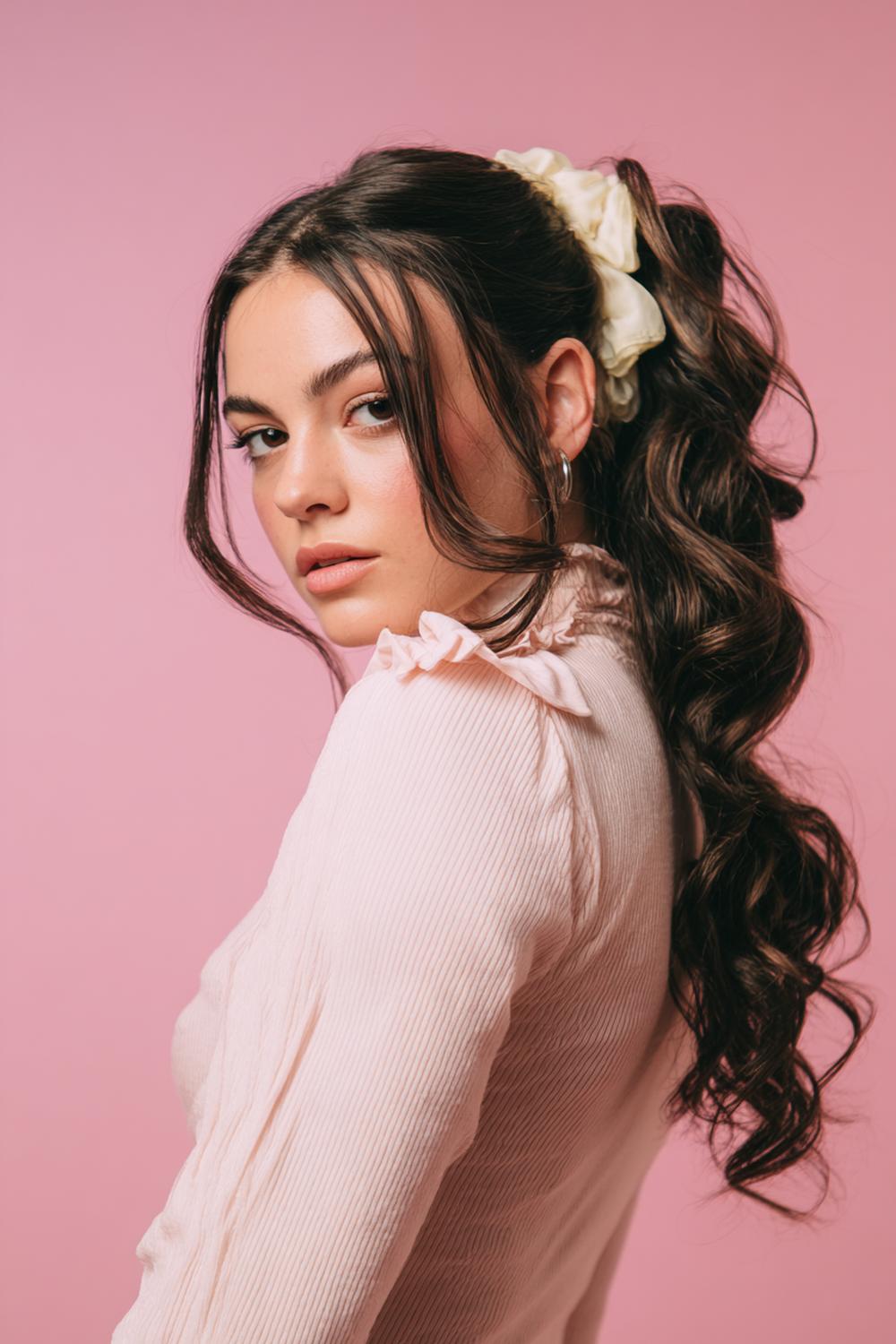
The photo shows an easy twist with volume left through the front. A claw clip works best when the hair has enough texture and grip.
This is one of the lower-maintenance options because it does not require daily heat styling.
15. Headband Hair Styling with Satin Finish and Blowout
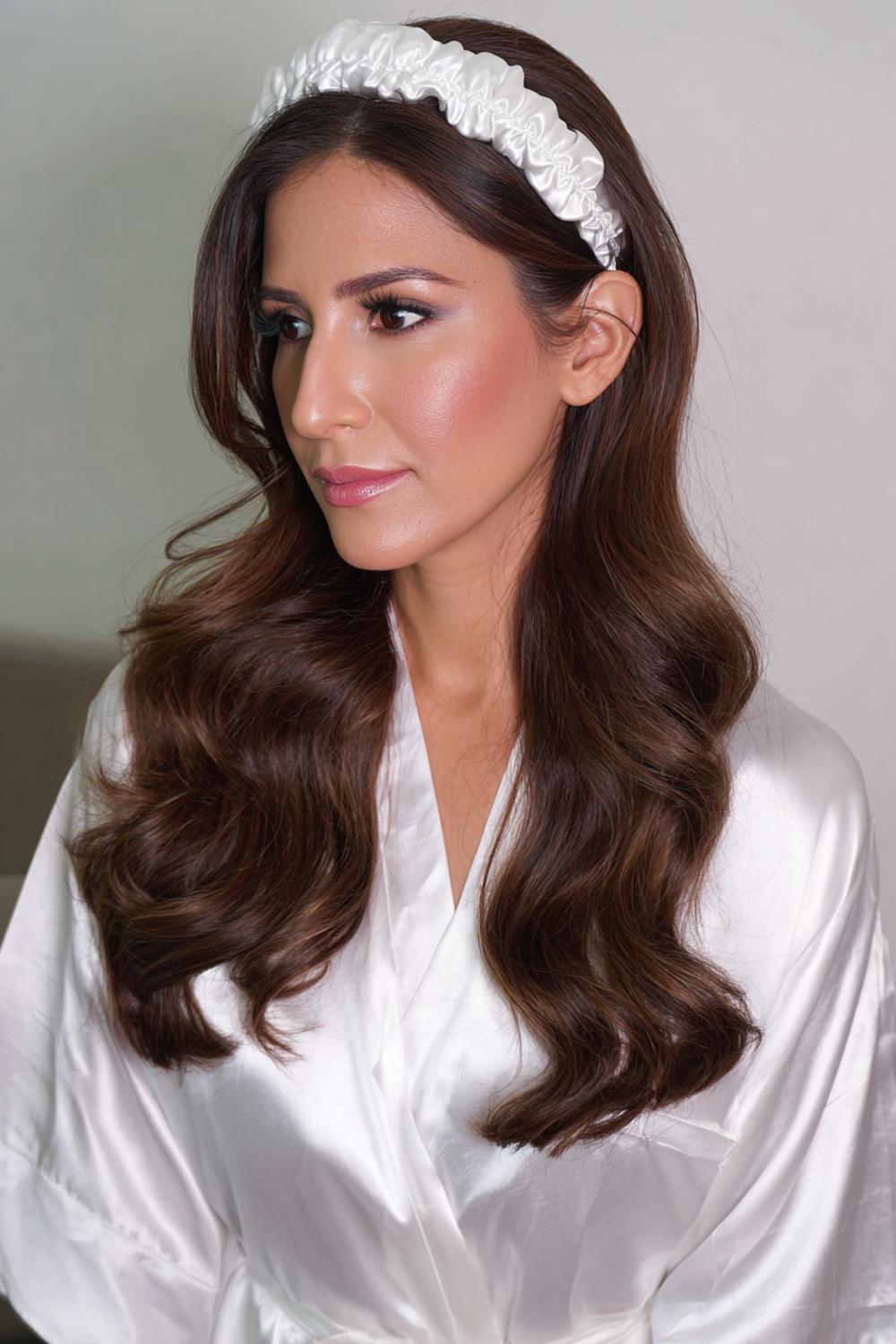
This look pairs a polished blowout with a headband accessory. The smooth satin effect comes from controlled brushing and shine products.
Heat tools should be paired with protection, as styling cannot reverse existing heat damage.
16. Ribbon Ponytail Hair with Bow Detail and Loose Waves
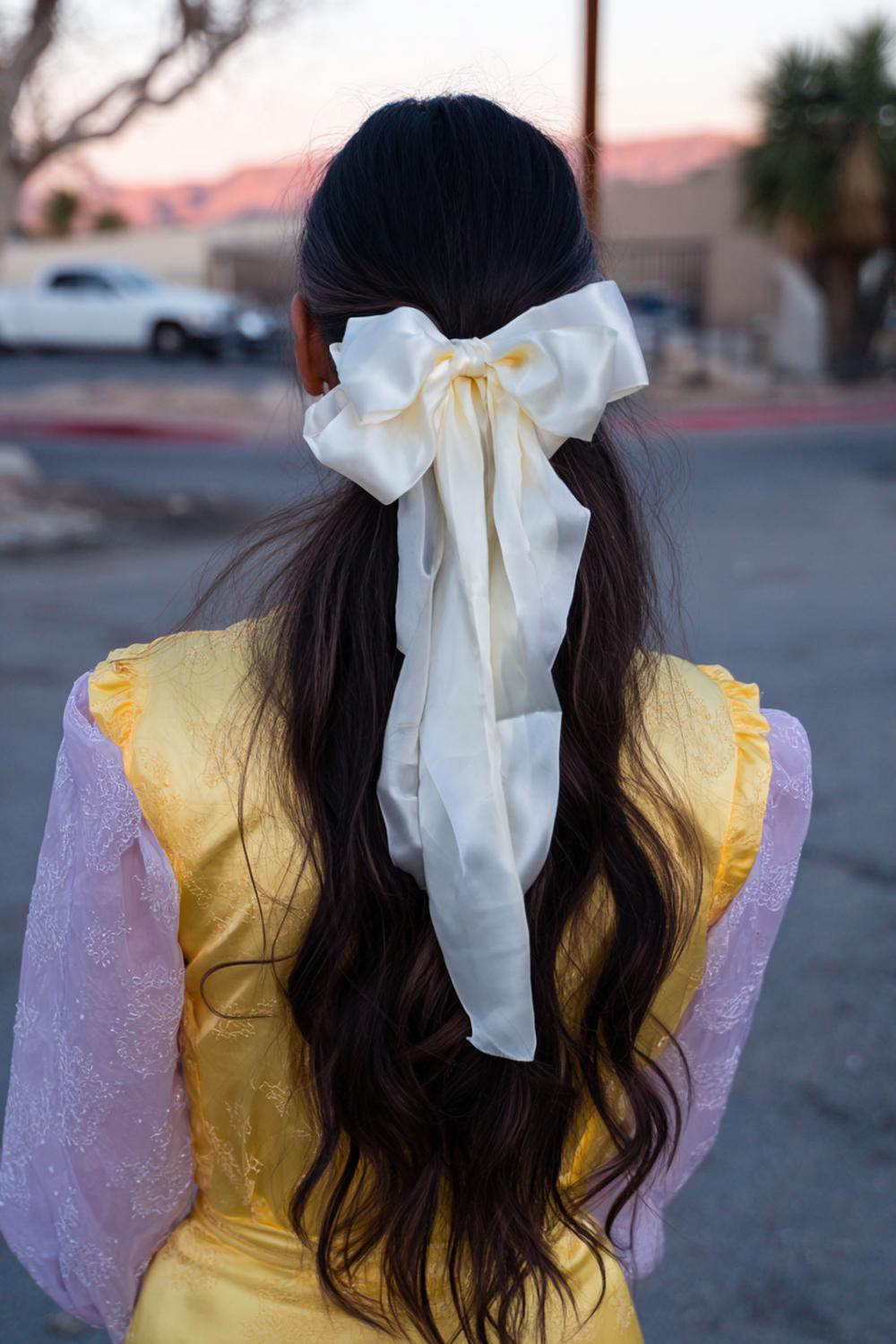
The image shows a soft ponytail finished with a large ribbon and loose waves. The statement accessory changes a simple style into an occasion look.
Keep the base secure but comfortable to avoid unnecessary tension.
17. Espresso Brunette Hair with High-Gloss Dimension
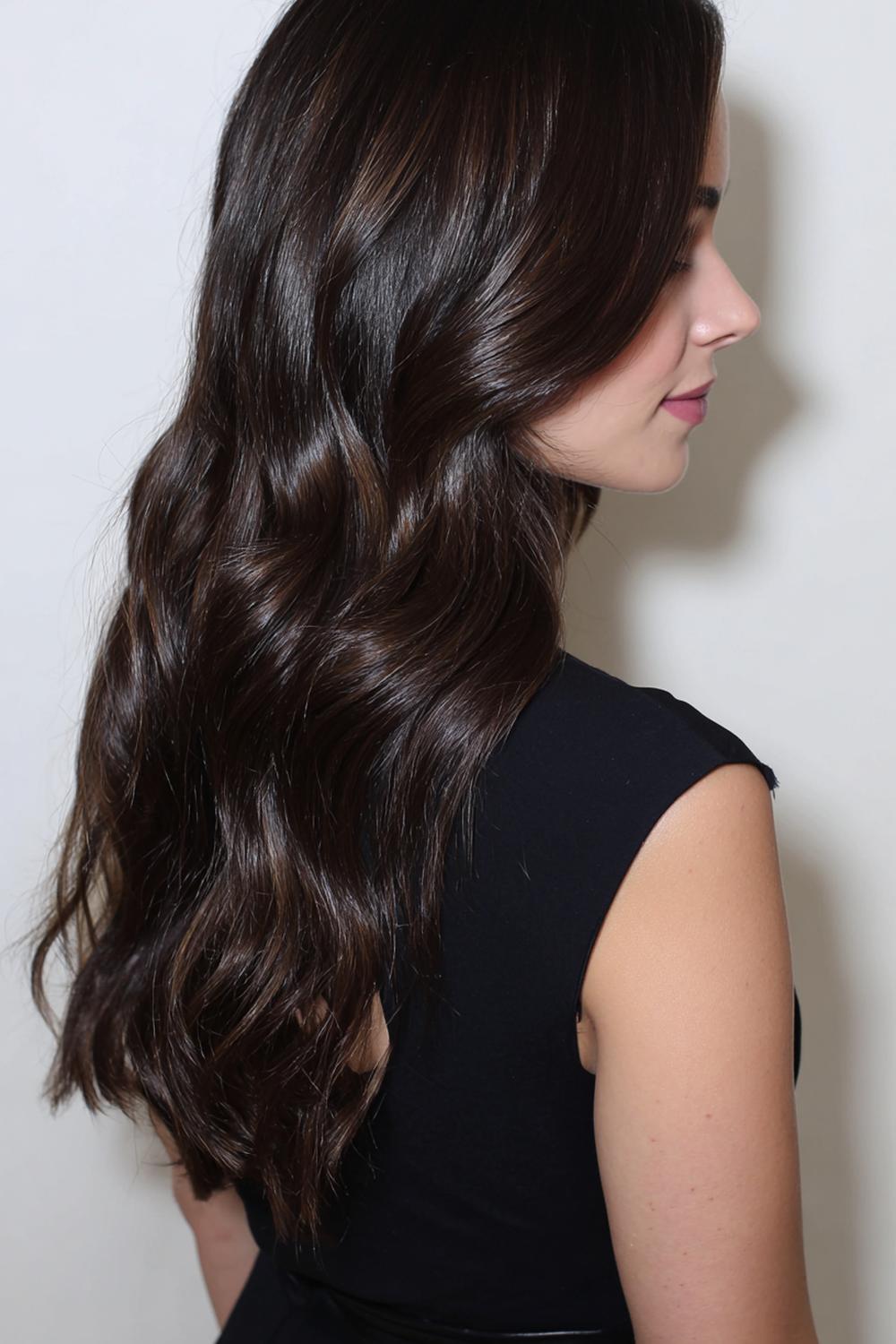
This brunette colour has deep shine with subtle variation rather than a flat dark tone. Espresso shades remain popular as part of the move toward rich natural colours. turn0news38cite
18. Chestnut Hair Balayage with Cinnamon Ribbons
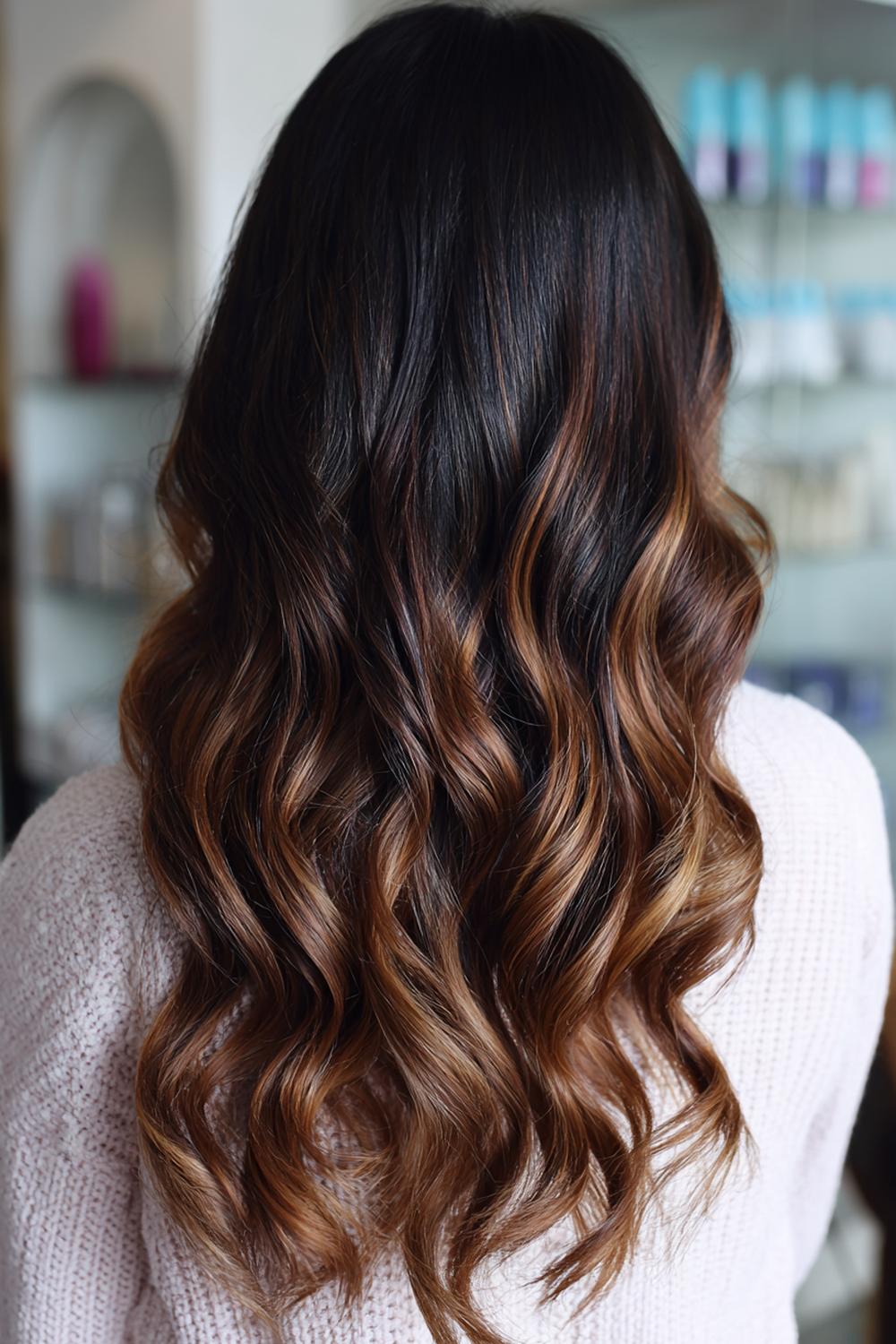
The photo shows warm brown hair with lighter cinnamon ribbons blended through the lengths. The soft balayage contrast creates dimension without a solid block of colour.
Lightening services should be planned with a professional, especially when previous colour history is involved.
19. Honey Blonde Hair with Shadow Root and Soft Melt
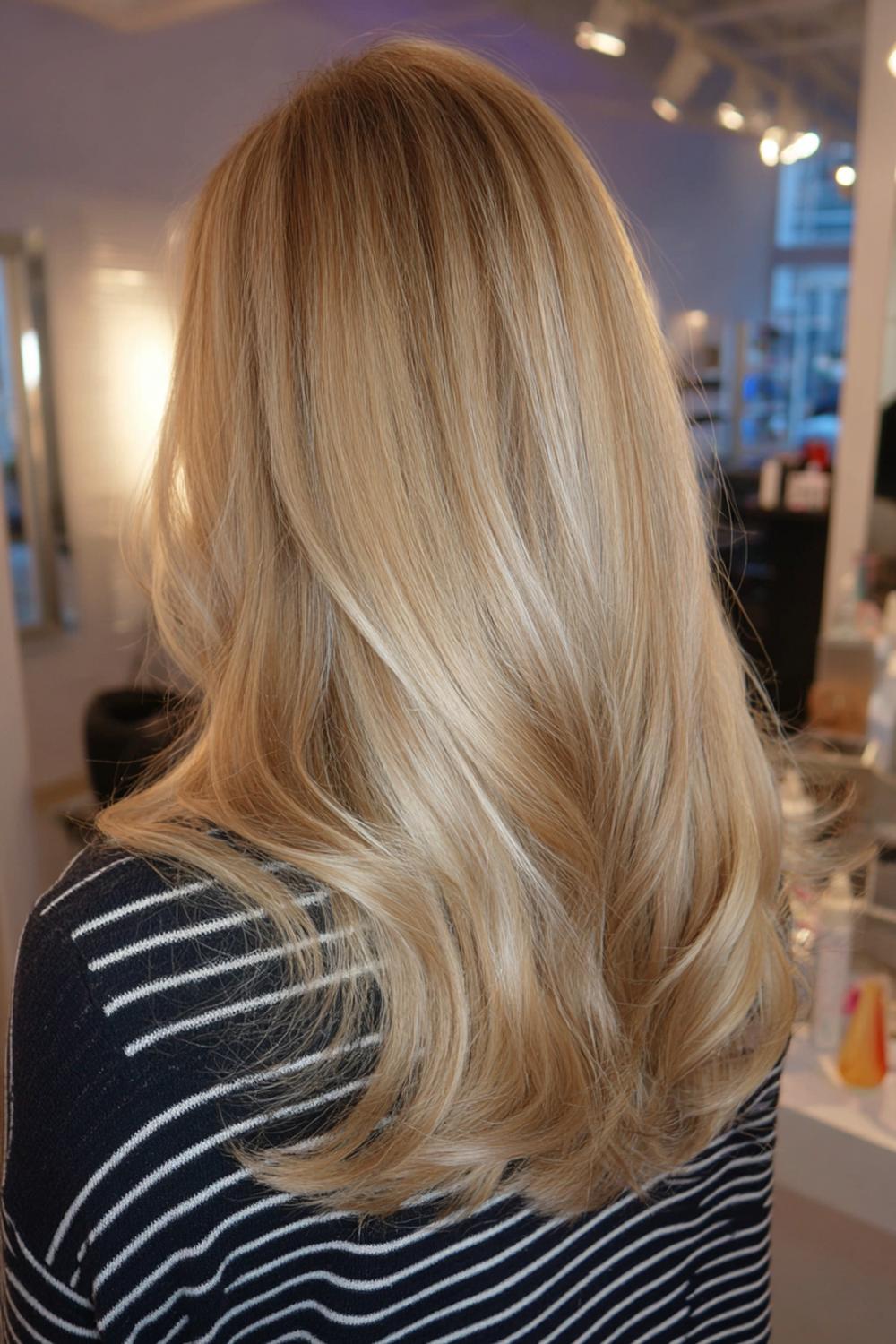
This blonde uses a darker root transition and creamy ends for a gradual effect. The shadow root technique can make grow-out less visually abrupt.
Bleaching and major lightening belong in a salon because hair condition and previous colour history affect the process.
20. Mushroom Blonde Hair with Cool Beige Lowlights
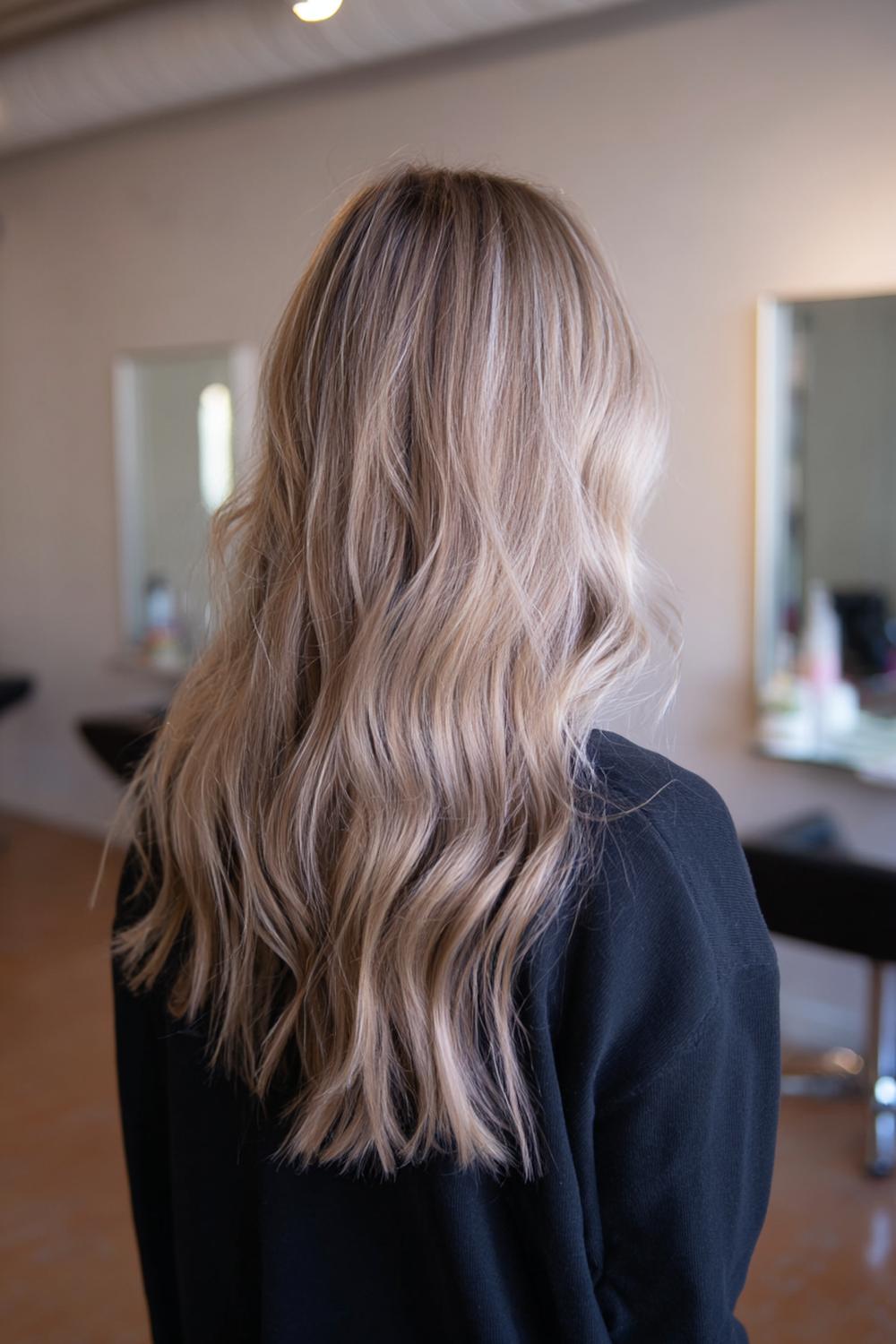
The final image shows a cool beige blonde with muted darker pieces. The mushroom blonde palette relies on careful toning and balance.
Colour maintenance varies widely, but consultations should include allergy testing, strand testing, and realistic upkeep expectations.
21. Copper Hair Glow with Apricot Highlights and Shine
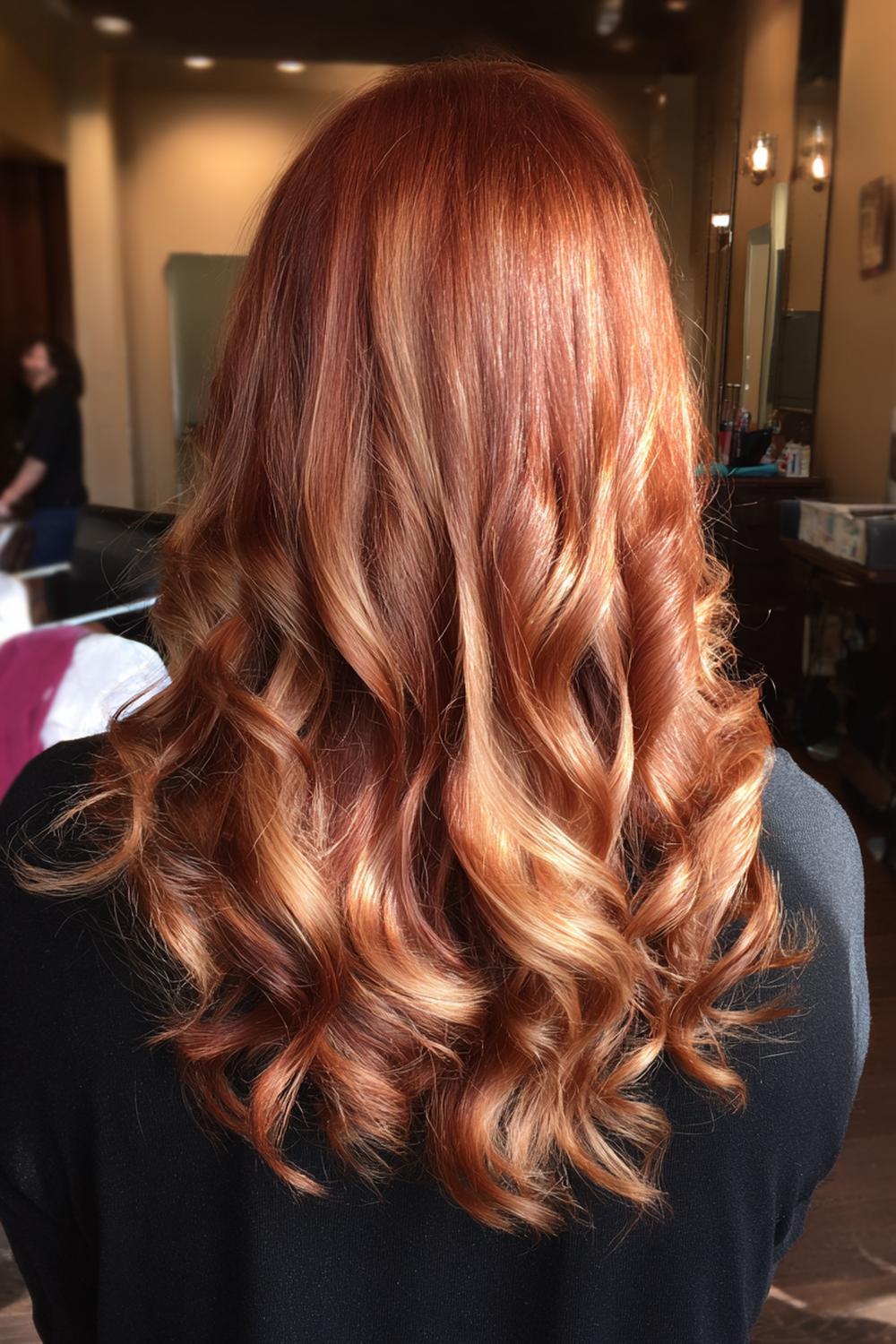
This first look shows long, loose waves with a copper base and lighter apricot ribbons catching the light through the mid-lengths and ends. The result depends on layered copper dimension rather than a single orange shade, which is why the waves show so much variation. Copper and apricot combinations are among the warmer multi-tonal colour directions being discussed for upcoming seasons.
For this kind of finish, I’d ask a colourist about the existing hair history before choosing the formula. Previously lightened hair, natural brunette hair, and grey hair can all take copper differently. A salon consultation should include a strand test and a 48-hour allergy test before colour application, even if the same product was used before.
| Feature | Reality check |
|---|---|
| Length needed | Best shown on shoulder length or longer because the waves reveal the colour ribbons. |
| Maintenance | Gloss refreshes are often needed around every 4–8 weeks depending on fading. |
| Styling | Loose curls usually take 20–40 minutes depending on density and tools. |
The warm reflect in this photo is strongest when the hair stays smooth, so heat styling should include heat protection. Treatments can improve feel and appearance, but they cannot reverse all chemical damage.
22. Cherry Cola Hair with Deep Red Undertone Layers
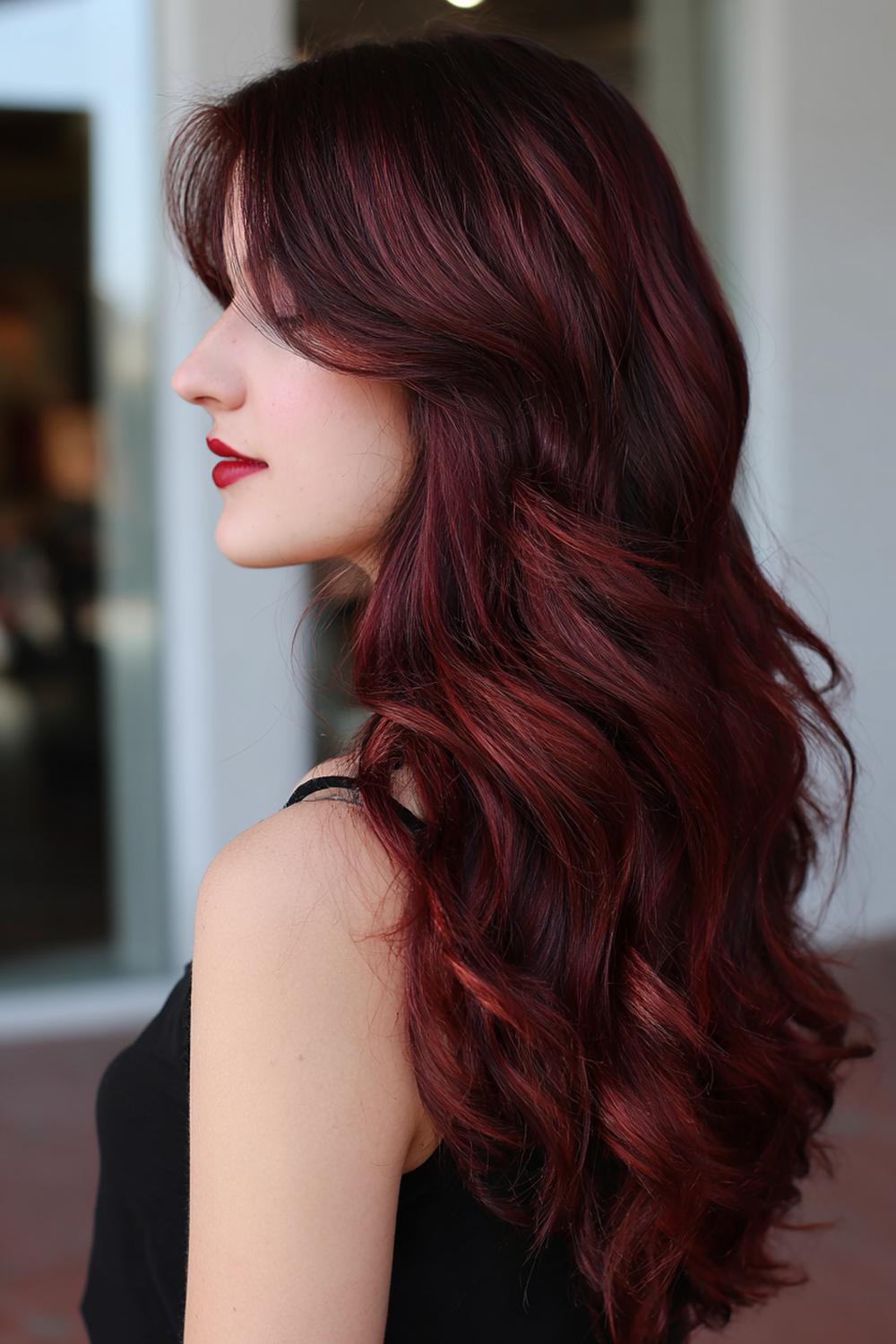
This style shows a rich cherry cola colour with dark red depth, soft waves, and a layered shape that lets different tones appear as the hair moves. The appeal of cherry cola colour is the mix of brunette depth and red-violet warmth rather than a bright red finish. Similar dark cherry shades have continued appearing in hair trend coverage for their dimensional effect.
The darker base makes this feel wearable, but red pigments can fade noticeably. I recommend discussing a maintenance plan before booking because the final tone depends heavily on the starting colour, previous dye, and porosity.
Colour safety note
Professional colour advice matters most when lightening, correcting old colour, or working over unknown dye history. Henna and metallic-salt dyes must be disclosed because they can react unpredictably with chemical services.
Pros
- Rich tone that shows movement in waves.
- Works well with layered cuts.
Cons
- Red tones usually need regular refreshing.
- Colour shifts can be more visible on porous ends.
For the loose texture shown here, a low-to-medium heat styling approach with gentle finishing products helps preserve shine between colour appointments.
23. Smoky Lilac Hair Tint with Dark Root Smudge
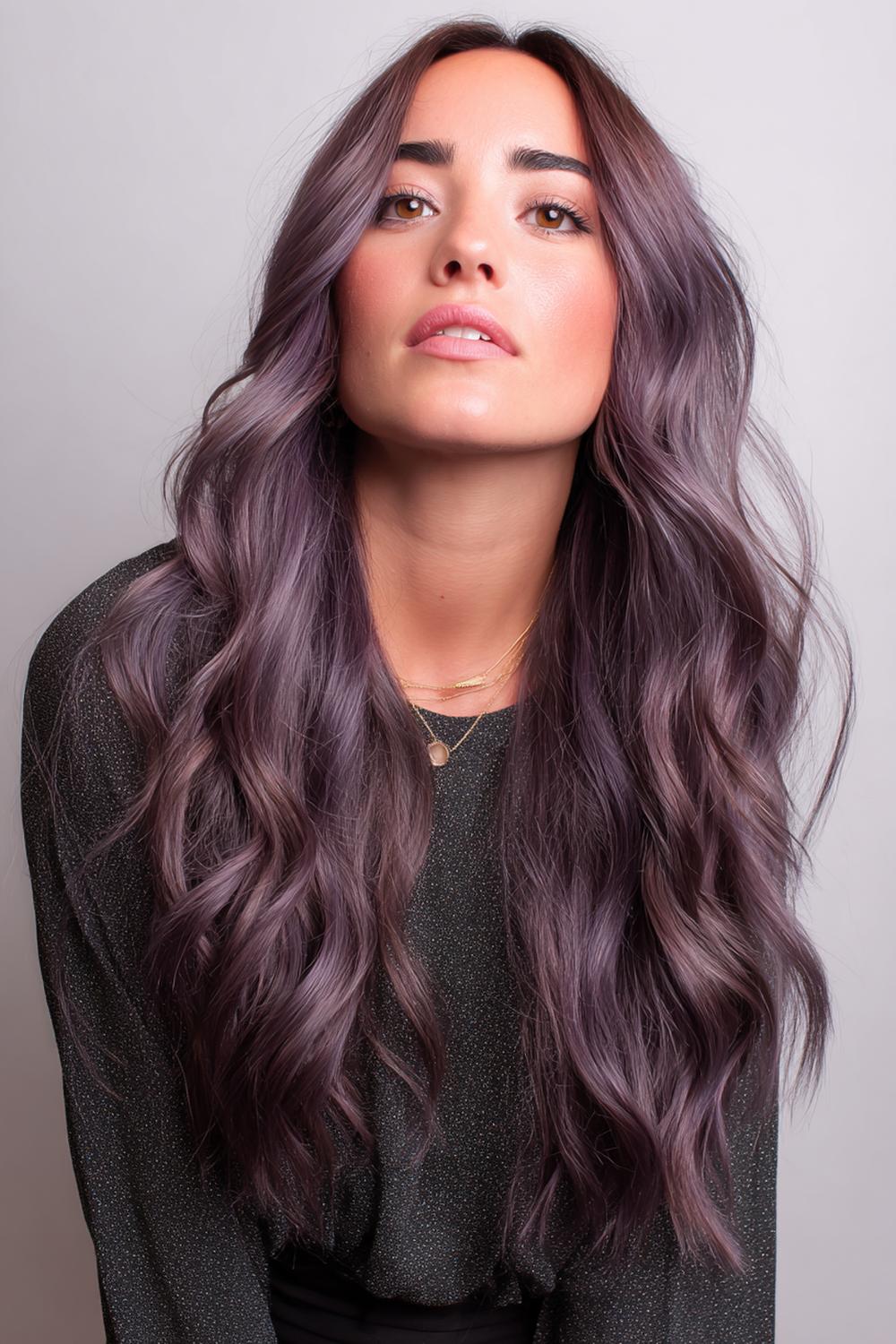
This look combines a smoky lilac tint with a deeper root area and long, soft waves. The darker root creates a gradual transition, while the pastel lengths give the style its muted finish. Lilac colour placement usually relies on a very controlled base, so the consultation matters more than the shade name alone.
Pastel tones generally require significant preparation and are not a simple overlay on every natural colour. Lightening services belong with a qualified professional, especially when multiple levels of lift or previous colour correction are involved.
- Consult. Share colour history, including old dyes and plant-based products.
- Test. Complete a strand test and allergy test before the service.
- Maintain. Plan regular salon toning appointments as the pastel fades.
I like this approach because the root area gives the colour a softer grow-out pattern. Fine hair may show the tone quickly but can also lose pastel intensity faster, while thicker hair may need more careful sectioning during the service.
Styling tip
Keep waves loose and avoid excessive heat because colour longevity is affected by repeated high-temperature styling.
24. Money Piece Hair Highlights with Bright Face Frame
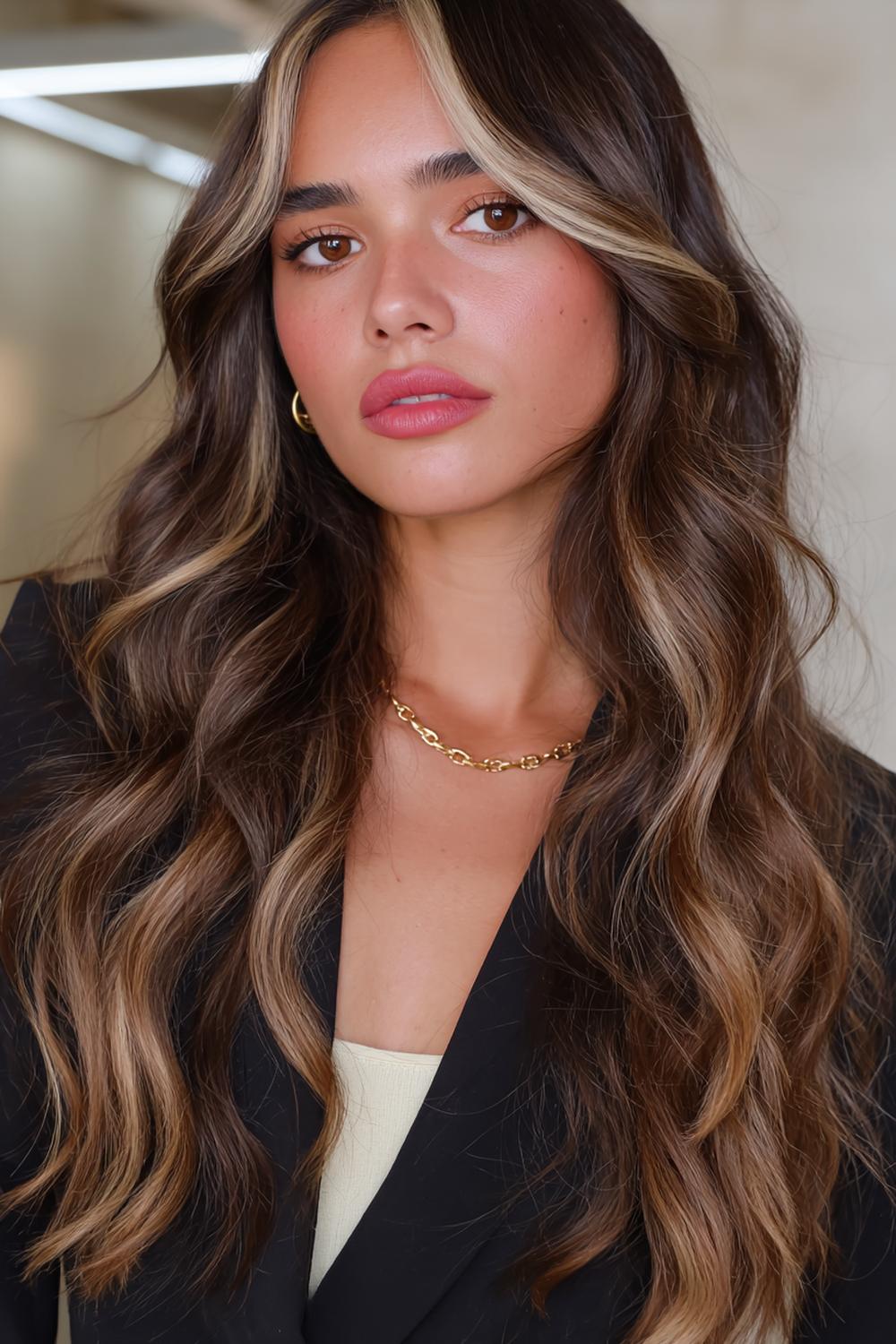
This final look shows a brunette base with lighter pieces placed around the face and blended waves through the lengths. The defining feature is the money piece highlight, a brighter face frame designed to create contrast without turning every section lighter. Face-framing highlights continue to be used as a personalized colour technique.
The placement in this photo is softer than the chunky versions seen in earlier trends. A colourist can adjust the brightness, width, and blend depending on natural colour, curl pattern, and how much upkeep feels realistic.
- Fine hair: Keep lighter pieces narrow to avoid losing the sense of fullness.
- Thick hair: More internal blending may be needed so the frame does not look disconnected.
- Wavy hair: Placement should follow the natural movement pattern.
- Grey hair: Blending, covering, or growing out are all valid colour choices.
The practical advantage of this technique is that maintenance can be focused around the front sections rather than the entire head. A typical salon refresh depends on the contrast chosen, with many clients returning when the grow-out no longer matches their preferred look.
More Pinterest Visuals